Consumer Reports’ auto experts say you should skip the unreliable and low-scoring EVs and consider these winning alternatives
When shopping for a small EV sedan, buyers considering the Kia Niro EV (top left) should also consider the Tesla Model 3.
By Jon Linkov
Each model year introduces electric vehicles with longer driving ranges, advanced safety features, and a variety of body styles. From small cars to SUVs, the unique packaging of EV components provides superior cargo and passenger room compared with similar gas-powered vehicles.
But Consumer Reports’ auto experts know that being brand-new doesn’t guarantee a model is a good vehicle. EVs are susceptible to the same uncomfortable rides, maddening controls, and defects as gas-powered models.
That’s why it’s important to approach each new-car shopping experience with an open mind and use CR’s ratings to find the best-performing vehicles in the class and price range you’re considering. Our testing shows that some new cars outperform others you see on the road everywhere you go.
Consumer Reports has thoroughly tested the models listed below to help you make an informed decision. We conduct road-test evaluations and gather data from our Annual Auto Surveys to provide insight into each model’s performance and reliability.
Based on this data, we then rate and rank each vehicle, with the highest Overall Score going to cars that excel in all areas examined. In this article, we present popular EVs in five categories and offer alternative options with higher Overall Scores.
If you’re a CR member, you can access the article and the list below. If not, you can become a member to access exclusive ratings and reviews for each vehicle and a wide range of other products, such as grills, mobile phones, appliances, and flat-screen TVs.
Electric Car to Avoid
While the Niro EV is one of the most pleasant-driving, lower-priced EVs, it scores too low to earn a Consumer Reports recommendation. The 11-kW onboard charger allows for quick home charging, but DC fast charging speeds are slow. With a 201-hp electric motor, acceleration is immediate and effortless. We got 239 miles in our highway-range test. Only FWD is available. Ride and handling are better than the regular Niro’s, though the steering feels disconnected and rubbery. The front seats are comfortable, the rear seat is roomy, and the hatchback design gives the EV versatility. The controls are relatively intuitive, other than the split-use panel for the audio and climate systems. Thick roof pillars compromise visibility.
Electric Car to Get Instead
The Tesla Model 3’s refresh improved ride comfort, but the controls are worse. We recorded an impressive 334 miles during our highway-range test of the Long Range AWD version. Home charging is speedy, at about 44 miles of range gained per hour. Although the front seats are comfortable, the rear seats are tight. Most controls are distracting, including selecting gears and adjusting the dash vents and side mirrors via the touchscreen, and using steering wheel buttons for the turn signals. Tiny red LEDs on the windshield pillars form a token BSW system. The new RWD base trim has a shorter range and fewer features than higher trims.
Another Choice
The Ioniq 6 has an EPA-estimated driving range of 240 to 342 miles, depending on the version. Our AWD test car with 20-inch tires and the larger battery went 265 miles in our highway-range test. The Ioniq 6 is capable of rapid DC fast charging. The ride is firm yet comfortable, handling is agile, acceleration is smooth, and the cabin is quiet. The front seats have good support, but the rear seat is tight on headroom. The sleek styling results in limited trunk space and compromised visibility. The window controls are inconveniently placed on the center console. A 641-hp performance Ioniq 6 N is coming in the spring.
Luxury Electric Car to Avoid
The all-wheel-drive EQE 320 4Matic we tested has a 91-kWh battery and managed an impressive 332 miles in our highway-range testing. The base rear-drive EQE 320+ is rated at 308 miles by the EPA. The EQE’s 315 hp makes this EV decisively quick. The ride is comfortable, and handling is surprisingly agile. The brake pedal has a disconcertingly mushy feel, even though stopping distances are short. The swanky interior is attractive, but the controls are too distracting, and it’s annoying that the steering wheel rim blocks the top of the driver’s instrument screen. In addition, the EQE’s below-average reliability prevents it from earning a Consumer Reports recommendation.
Luxury Electric Car to Get Instead
The BMW i5 M60 EV combines super-quick acceleration with agile handling and a cushy ride. The single-motor eDrive40 produces 335 hp, while the dual-motor AWD xDrive40 makes 389 hp. The top-level M60 we tested churns out 590 hp and covered 295 miles on a single charge during our highway-range test, far exceeding the EPA’s estimate. Its max DC fast charging acceptance rate is a competitive 205 kW. The front seats are supportive and very comfortable, while the rear seat is a little cramped for the class. The luxurious interior features a digital instrument display and a 14.9-inch center touchscreen that handles audio and climate functions.
Porsche’s four-door Taycan is quick, agile, and very enjoyable to drive. We tested a 4S Plus with an EPA-rated range of 295 miles. It takes 11 hours to charge the 93-kWh battery at Level 2, but it has a max 300-kW acceptance rate at DC fast chargers. The front seats are comfortable, but the rear seats are tight. Visibility to the rear and sides is hindered by the sloping roof. There’s a decent-sized rear trunk and a small front trunk. The touchscreen-based controls are complicated and unintuitive, and the EV-related displays aren’t very prominent. The 4 Cross Turismo is a wagonlike variant. An adapter is included to use Tesla Superchargers.
Two-Row Electric SUV to Avoid
Honda’s Prologue all-electric SUV is based on GM’s Ultium EV platform, and like some of those GM models, it has below-average reliability. In front-wheel-drive guise, the EV has an EPA-estimated range of 308 miles, while AWD models are rated at 283 to 294 miles of range, depending on trim. An 11.5-kW onboard charger enables quick home charging, but its 150-kW maximum charging rate at DC fast chargers is unimpressive. The EV delivers its power smoothly and linearly, but the ride is rather stiff and the handling uninspiring due to slow, vague steering. The column-mounted gear selector and wiper controls will be new to current Honda owners. Unlike GM’s EVs, the Prologue includes Android Auto and Apple CarPlay. Owner satisfaction is also below average.
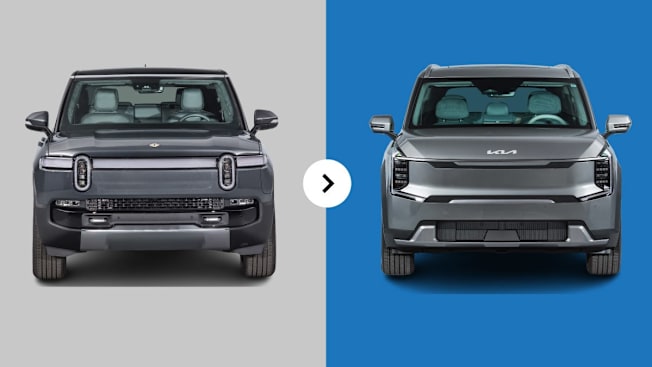
Two-Row Electric SUV to Get Instead
The refreshed Model Y SUV has a more compliant ride, a quieter cabin, and nicer interior materials. The thrilling acceleration, nimble handling, and long driving range remain, but the controls have become even more distracting. We recorded an impressive 331 miles during our highway-range test of the AWD version with the long-range battery. Home charging is speedy, at about 42 miles of range gained per hour. The front seats are supportive and comfortable, and the rear bench is roomy. Cargo room is generous. Most tasks, including using the gear selector and adjusting the dash vents, are unintuitively handled through the center touchscreen.
The Equinox EV is quick and quiet, and rides comfortably. Front-drive versions have an EPA-estimated range of 319 miles. The AWD model we tested managed a competitive 304 miles in our highway-range test. The 150-kW maximum acceptance rate at DC fast chargers isn’t particularly quick. The SUV’s quicker steering gives it responsive handling. The comfortable front seats are shy on lateral support, while the roomy rear seat lacks underleg support. The infotainment touchscreen is overcrowded with small icons. The Super Cruise active driving assistance system is optional, and Android Auto and Apple CarPlay aren’t offered.
Luxury Electric SUV to Avoid
The midsized Q6 E-Tron is touted as a luxury EV, but its firm ride doesn’t feel luxurious. Single-motor RWD and dual-motor AWD versions are offered. The dual-motor Q6 we tested is quite quick, sprinting from 0 to 60 mph in just 4.9 seconds. It managed 285 miles in our 70-mph highway-range test, which is a touch below the EPA-estimated 295 miles. Rapid DC fast charging is possible thanks to an impressive 270 kW max acceptance rate. The front seats are firm but comfortable and supportive, while the rear seat is roomy. But many of the interior controls are unintuitive and distracting to use while driving. Reliability is below average, which keeps the Q6 E-Tron from earning a Consumer Reports recommendation.
Luxury Electric SUV to Get Instead
The impressive BMW iX is super-quick and quiet, delivers a plush ride and agile handling, and has a uniquely stylish cabin. It covered a commendable 370 miles in our highway-range test. The airy interior is luxurious and uncluttered, but the controls are complicated because too many functions require interacting with the infotainment screen. The maximum 195 kW acceptance rate at DC fast chargers is competitive. It takes 11 hours to charge the 111-kWh battery from empty on 240 volts. The optional driving assistance suite includes adaptive cruise control and lane centering assistance. 2026 brings several updates and more standard features.
Electric Pickup Truck to Avoid
The R1T is very quick and quiet, rides comfortably, and handles with agility, but its well-below-average reliability prevents it from being recommended. With its 135-kWh battery, the truck managed 334 miles during our 70-mph highway-range test. It’s impressively capable off-road. But the regenerative braking system is too strong, resulting in abruptness whenever the driver adjusts the throttle; it takes a lot of concentration to drive smoothly. The uncluttered interior has a high-tech vibe, but several common tasks entail multiple steps through the touchscreen, which is distracting. The truck has a large front trunk and an innovative transverse storage tunnel between the cab and bed.
Electric Pickup Truck to Get Instead
The F-150 Lightning was Ford’s first fully electric pickup. Production has been discontinued, but 2025 models are still available. We got 270 miles during our 70-mph highway-range test with the larger battery. The max DC fast charging acceptance rate is just 150 kW. The powerful truck delivers quick acceleration, and its independent rear suspension provides a more comfortable ride than the regular F-150. The larger battery version has a 1,952-pound payload capacity and a 10,000-pound tow rating. The next-generation Lightning will be an extended-range electric vehicle with an onboard generator, promising a total range of up to 700 miles.
Consumer Reports is an independent, nonprofit organization that works side by side with consumers to create a fairer, safer, and healthier world. CR does not endorse products or services, and does not accept advertising. Copyright © 2026, Consumer Reports, Inc.