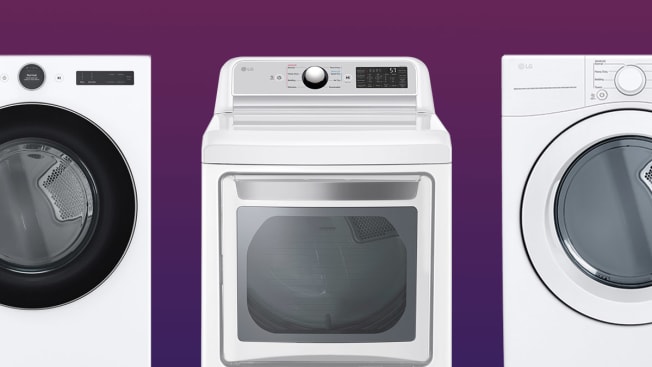
Gas dryers have taken some heat, but they still have a place in many laundry rooms
In areas with high electricity prices, gas dryers can be cheaper to operate than electric dryers.
By Keith Flamer
If you have a gas clothes dryer, you’re in the minority. Electric models dominate in laundry rooms, with an 80 percent market share over the past 12 months, according to OpenBrand, a market research firm that tracks appliance sales and trends.
But despite their smaller numbers, gas dryers fill a regional and economic niche that can’t be blown off like lint. They’re still in demand, and major appliance brands are unlikely to abandon them anytime soon, despite efforts in some communities to ban them in new construction.
Over the past four quarters, gas dryers represented 27 percent of the dryer market in the Northeast, 25 percent in the Midwest, 12 percent in the South, and 27 percent in the West, according to OpenBrand’s consumer-reported survey. Gas dryer demand on coasts is typically higher, considering that states like Alaska, California, Hawaii, Maine, and Rhode Island pay some of the highest rates for electricity in the U.S. Depending on where you live, a gas dryer may be a more economical choice.
“Gas remains a cost-effective heating source in regions where rates for electricity are higher,” says Bryce Tecson, a home appliance analyst at OpenBrand. “For that reason, it’s not surprising to see gas dryers gaining traction in the West and parts of the Northeast and Midwest. However, in the South, where the climate is warmer and natural gas infrastructure is less prevalent, the appeal of gas dryers remains limited.”
The Lowdown on Gas Dryers
Unlike electric dryers, which use electricity to generate heat for drying clothes, gas dryers burn natural gas or propane to produce heat and use electricity only to power the drum, fan, lights, and controls. Because they require less electrical power, they can be plugged into a 120-volt outlet rather than the 240-volt outlet that most electric dryers require. But gas dryers also require a gas supply line and a vent to exhaust combustion gases outside the home.
Major brands, including GE, LG, Maytag, Samsung, and Whirlpool, offer both gas and electric dryers. LG and Samsung are market leaders for gas dryers, according to OpenBrand. Before choosing a gas dryer, make sure your laundry area has a working gas line and a 120-volt outlet. If not, you will need to install those. As always, measure the space you have for your new dryer and your doorways to ensure easy delivery and installation. Perhaps for obvious reasons, most people keep their current hookup—gas or electric—when purchasing a new dryer.
How Much Do Gas Dryers Cost?
On average, gas dryers cost $50 to $150 more than electric dryers. But because gas dryers cost less to operate (gas is usually less expensive than electricity), they will save enough money in the long term to easily recoup that initial premium.
“When you look at the national averages for electricity and natural gas, electricity is over three times more expensive,” says Frank Spinelli, associate director of appliance testing at Consumer Reports. “It really matters what the prices are for each fuel, and then you can evaluate which is best for you,” depending on where you live.
In our ratings, gas dryers range from about $530 to $2,300, with many high-performing models available for under $1,000. For example, you can find a very good GE Profile gas dryer for less than $900 that gets the same Overall Score as a $2,300 Speed Queen.
Are Gas Clothes Dryers Better Than Electric?
Our tests show that gas dryers and electric dryers are comparable in performance, reliability, size, noise, convenience, and design. Eighty-seven percent of the gas dryers in our ratings have an excellent or very good Overall Score compared with 81 percent for electric models.
Which one is best for your home—and budget—comes down to the cost of electricity vs. the cost of gas in your area, and which type your laundry room is equipped to accommodate.
How CR Tests Clothes Dryers
Previously, CR had considered the gas version of dryer models we tested to be similar to the electric versions. But as our testing and ratings methods have evolved, we found that the operational differences between the gas and electric versions of the same model were significant enough to warrant testing both. As a result, you’ll now find nearly 40 gas dryers in our ratings, each assessed for drying performance, noise, and convenience, just like their electric counterparts.
We test both gas and electric dryers by running loads of laundry of varied weights and fabrics. To help you choose the best dryer for your home and budget, we combine our test results with data on predicted reliability and owner satisfaction from our member surveys into a single Overall Score for each dryer. Our rigorous lab tests include the following steps:
We time how long it takes to dry each load using the most appropriate setting: the minimum setting to see whether clothes come out damp, and the maximum setting to see whether the dryer can dry laundry in the shortest possible time without overdrying it. If the dryer has a moisture sensor, we assess its effectiveness—whether it stops within 5 minutes of a fully dry load or keeps running up to 40 minutes. Additionally, we measure the energy a dryer uses to calculate its annual operating cost.
We assess the convenience of each machine by evaluating its controls and ergonomics during the loading and unloading of laundry. Our panelists also rate the dryer’s noise level during the drying of an average-sized load.
Best Gas Clothes Dryers From CR’s Tests
LG dominates the top nine slots of our gas dryer ratings. That’s primarily because of the brand’s reliability, energy efficiency, and performance in our comprehensive tests. The brand also offers a variety of machines, price ranges, and features, providing consumers with several choices. But dryers from other brands can also do the job. Below are some of the top gas dryers from our ratings.
LG DLGX5501W
Two LGs top our gas dryer ratings with high Overall Scores, first-rate reliability, and strong marks in performance, convenience, and noise (they’re both very quiet). LG DLGX5501W and LG DLGX6501W are standard-size, stackable machines with moisture sensors, stainless steel drums, 7.4 cubic feet of capacity, steam settings, extended tumble cycles, and WiFi access. Scoring just a notch lower is the less expensive DLG3471W, but that model doesn’t offer a stainless tub or WiFi.) All three are capable machines that will finish a load in under 70 minutes and cost less than $77 per year to operate. As a brand, LG receives high owner satisfaction marks, according to our member surveys.
LG DLGX6701B
The next two gas dryers in our ratings operate quietly and efficiently, thanks to moisture sensors that automatically adjust drying times and an auto-dryness control that, in our tests, effectively shuts off the dryer within 5 minutes of the clothes being fully dry. The pricier LG DLGX6701B is a stackable gas dryer with a steam option, custom programs, and slightly more capacity (7.4 cubic feet). The LG DLG8401WE matches it in Overall Score, but you’ll save several hundred dollars and still get WiFi access and a 7.3-cubic-foot capacity. You’ll miss out on a stainless steel tub, a steam option, and the versatility of stacking.
LG DLG6101W
The next three gas dryers in our ratings—the LG DLG6101W, LG DLG7151W, and LG DLG7001W—offer the same impressive performance, 7.3-cubic-foot capacity, a duct blockage indicator, and a moisture sensor that will detect when your clothes are truly dry. But all three lack extras such as a steel drum, custom programs, and a steam setting. They also have rear controls, which means they’re not stackable. The LG DLG6101W lacks the extended tumble feature of its brandmates, but it costs considerably less, making it the lowest-priced among our top-rated gas models. Among these models, the LG DLG7151W is the priciest, but like the others, its price is competitive. The LG DLG7001W has the lowest usage cost among this trio, and its overall price has dropped significantly since we last highlighted this model. It’s also easier to use than the other two dryers, according to our testing.
LG DLGX8901B
The LG DLGX8901B’s 9-cubic-foot stainless drum is the largest in our ratings, and its black steel finish and square-door styling will make a statement in your laundry room. This model performed above par in all our tests, including drying performance, convenience, and noise. It’s equipped with a moisture sensor, a steam setting, and WiFi, and it’s Energy Star certified and stackable. Like other LG gas dryers, it earns an excellent reliability score and a near-the-top owner satisfaction score.
GE GFD55GSSNWW
The GE GFD55GSSNWW is a high performer but a mixed bag. While it rates very well in our performance, convenience, and noise tests, it falls short in our consumer survey, achieving middling reliability but subpar owner satisfaction marks from CR members. It features a stainless steel drum with a capacity of 7.8 cubic feet, a moisture sensor, a steam setting, and WiFi. Its 66-minute dry cycle is on a par with the higher-scoring LGs above. This GE model is also stackable and Energy Star certified, and comes with a one-year warranty.
Consumer Reports is an independent, nonprofit organization that works side by side with consumers to create a fairer, safer, and healthier world. CR does not endorse products or services, and does not accept advertising. Copyright © 2026, Consumer Reports, Inc.