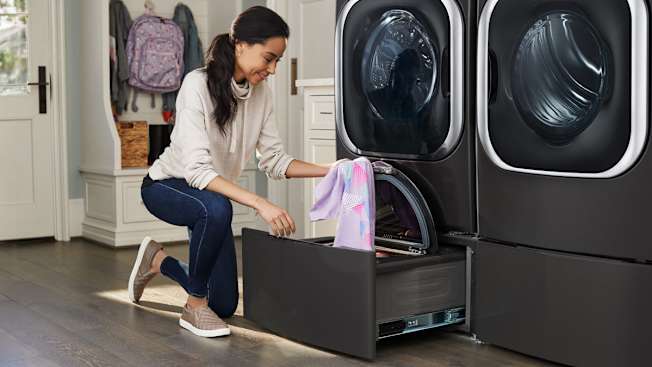
Energy and water efficiency are the first things to consider, but reliability and gentleness count, too
Washing machines are more efficient than ever, but some are more environmentally friendly than others.
By Keith Flamer
When you’re shopping for a new washing machine, you want one that gets your clothes clean, of course. But what if you could invest in an efficient machine that helps keep the environment clean, too?
We took a deep dive into our ratings to find the washing machines whose performance, energy and water efficiency, and reliability make them good choices if protecting the environment (not to mention your own wallet) is a priority for you.
Of the approximately 120 washing machines currently in our ratings, 15 front-loaders, three high-efficiency top-loaders, and 12 compacts earn our top scores for both energy and water efficiency. They include brands such as Bosch, Electrolux, GE, GE Profile, LG, Miele, and Samsung. No top-load agitator machines, which use between 16 and 24 gallons of water per average-sized load in our tests, earned excellent scores in both measurements. They’re also rougher on clothes and typically deliver lower cleaning performance than front-loaders and top-load HE machines. As a result, we haven’t included any top-load agitators in this list.
What Makes a Washing Machine Eco-Friendly?
For this list, we look first at each machine’s performance, along with its energy and water consumption. To a lesser degree, we consider the washer’s reliability, its gentleness on clothes, and whether it’s Energy Star certified, meaning it uses 20 percent less energy and about 30 percent less water than conventional washers.
Performance matters because a machine that doesn’t clean well may lead to repeated washings, wasting resources. In our washing performance test, we track how well the washer cleans prestained swatches in a representative test load of mixed cottons using the machine’s most aggressive normal setting.
We also gauge a washer’s total water consumption per pound of laundry. Washers that minimize water use by adjusting the water level based on load size, and innovations like dual water systems that reuse rinse-cycle water, further enhance water conservation efforts. For our energy-efficiency score, we calculate the amount of electricity required to operate a washer, heat the water it uses, and spin clothes after washing. The most energy-efficient washers in our ratings typically cost the least to use over the course of a year, which is reflected in the Annual Usage Cost listed in our ratings. If a machine isn’t in our ratings, check the yellow EnergyGuide label on the washer to see how much that model will cost you to operate.
The machines highlighted here also demonstrate solid reliability based on our member surveys, meaning they’re less likely to end up in a landfill before their time. Our reliability scores are based on data from our surveys of CR members who purchased 108,608 washing machines between 2015 and 2025. This rating estimates the likelihood that a particular brand and type of washer will experience problems or break within the first five years of ownership.
To a lesser extent, we consider a machine’s gentleness score. That’s because the longer your clothes last, the less likely you are to have to replace them. We use special cloths in our tests to determine how rough a machine is on the fabrics it washes. Clothing manufacturing and disposal have a significant impact on the environment. According to the United Nations, the fashion industry is the second biggest consumer of water and is responsible for 2 to 8 percent of global carbon emissions.
CR members can read on for ratings and reviews of some of the highest-performing environmentally friendly washers from our tests. For more information as you shop, see our washing machine buying guide, and for a comprehensive look at all the washers we test, see our complete washing machine ratings. If you’re in the market for an energy-efficient dryer or dishwasher, we can guide you as well. And if you’re interested in pursuing a green lifestyle beyond laundry, check out CR’s Guide to Sustainable Living.
Best Eco-Friendly Front-Loaders
Front-load washers, including compacts, can cost well over $1,000, significantly more than top-loaders. But they are the most water-efficient machines you can buy. Full-sized front-loaders use an average of 10 gallons per load, compared with 13 gallons for high-efficiency top-loaders and 20 gallons for top-load agitators. Despite longer wash times than top-loaders, they’re energy misers. The annual usage cost for front-loaders in our ratings averages less than $30 a year. Plus, their high spin speeds extract more water from clothing than other machines, meaning your dryer doesn’t have to work as hard.
Below are some of the top-rated energy- and water-efficient washers we’ve tested, all of which also have reliability ratings that are average or better. We also point out those machines with a high gentleness score because they will cause less long-term wear and tear on your clothes and flush fewer microfibers down the drain and into our waterways.
LG WM4000HWA
You can expect the LG WM4000HWA to clean like a champ, comparable to its tested (and now discontinued) brandmate, the LG WM3900HWA. It leads our ratings in performance, along with LG WM3400CW, another eco-friendly front-loader. Both deliver exceptional performance, top-notch reliability, high owner satisfaction, and stellar water and energy efficiency. Those attributes keep them on this list, even if they’re not super gentle on fabrics. Feature-wise, they’re both stackable, with auto dispensers, stainless steel tubs that are 4.5 cubic feet, extra rinse cycles, and WiFi access. Where they differ is in price, cycle times, and custom cycles. The more expensive LG WM4000HWA offers a steam option, an 85-minute cycle time, and an annual usage cost of $26; the budget-friendly LGWM3400CW lacks a steam cycle and takes 20 minutes longer to wash a load (with a $29 annual usage cost).
LG WM8900HBA
Another group of CR Recommended LGs also offers impressive energy and water efficiency, with larger stainless steel tubs that can handle family-sized laundry loads. The largest, the 5.2-cubic-foot LG WM8900HBA, is an exceptional washer despite its longish 105-minute tested wash cycle and $1,400 price. With a $29 annual usage cost, this model is very gentle on clothes and features auto-temperature control, auto-bleach, and detergent dispensing, WiFi, and a steam option.
Moving down our ratings, the next set of eco-friendly LGs has Overall Scores between 84 and 81, and features stainless steel tubs that are 5 cubic feet, auto temperature control, auto dispensers, extra rinse cycles, WiFi, and Energy Star certification. At about $1,100, the stackable LG WM6500HWA earns top marks for washing performance, energy efficiency, and water efficiency, as well as very good scores for gentleness and noise (you’ll feel it vibrate, though). Its annual usage cost is $23, the lowest of any front-loader. The stackable LG WM6700HBA is rougher on clothes, but it offers excellent washing performance and energy and water efficiency, although its noise level, vibration, and 120-minute cycle require patience. Finally, the LG WM3470CW is a good value due to its efficiency, performance, and budget price (just over $800). In our lab, this stackable washer excelled in water and energy efficiency and performed impressively in washing performance over its quiet 95-minute wash cycle. But it vibrates more than most front-loaders.
Electrolux 300 Series ELFW7337AW
Though it vibrates, the Electrolux 300 Series ELFW7337 is a very good washer, boasting excellent water and energy efficiency, and it’s quite gentle on clothes, so this model will cause less fabric pilling, fraying, and tearing, and less microfiber shedding into the wastewater stream. It also does a solid job of cleaning laundry faster than many front-loaders (its normal/heavy cycle is 90 minutes). It features a 4.4-cubic-foot drum, right on the cusp of CR’s recommendation for washing comforters (use its extra rinse cycle to wash away any excess residue). It’s convenient to use with auto dispensers for detergent, fabric softener, and bleach. It’s also stackable and Energy Star certified.
Best Eco-Friendly HE Top-Loaders
We singled out three high-efficiency (HE) top-load washing machines in our ratings for their excellent energy and water efficiency. But only one model is CR Recommended, and each has its own drawbacks. Overall, top-load HEs don’t clean as well as front-loaders, but their roomy tubs let you wash larger family-sized loads using less water. These washers typically adjust water levels automatically based on load size.
LG WT8200CW
Although it’s a little noisy and can be rough on fabrics, the CR Recommended LG WT8200CW excels in reliability, washing performance, energy efficiency, and water efficiency. It’s Energy Star certified and features automatic detergent and bleach dispensers, an extra rinse cycle, a capacity of 5 cubic feet, and an 80-minute wash cycle. Its annual usage cost is just $31. But this model’s mediocre gentleness rating means it could wear down your finest clothes over time.
Samsung WA52DG5500AV (Home Depot)
Though not CR Recommended, this Home Depot exclusive, eco-friendly washer offers top-notch energy and water efficiency, is Energy-Star certified, and does a fine job cleaning clothes (an area where some HE washers struggle). The sleek black machine is quiet, with 5.2 cubic feet of capacity, and it doesn’t vibrate like most compact units. But don’t expect this washer to be gentle on clothes. Also, Samsung top-load HE washers earn just a middling reliability score, and their owner satisfaction score indicates that CR survey respondents aren’t likely to recommend them to others.
Best Eco-Friendly Compact Front-Loaders
Twelve compact front-loaders earn our top scores for energy and water efficiency. Many cost more than traditional front-loaders, but they’re some of the most energy-efficient, water-efficient, and gentle washers on the market. Here are the top eco-friendly compact washers.
Miele WXI860WCS
The Miele WXI860WCS, Miele WXF660WCS, and Miele WXR860 are pricey, but all three will pay you back with excellent washing performance, top-notch water and energy efficiency, and gentle TLC for your best threads. These 2.3-cubic-foot workhorses may vibrate during their 100-minute cycles, but based on our tests of the Miele WXI860WCS, we expect all to perform impressively. The stackable machines cost $28 per year to operate, and they feature durable stainless steel tubs that enable spinning at faster speeds, along with auto dispensers for detergent, bleach, and fabric softener. Each has an end-of-cycle signal, an extra rinse cycle, a steam cycle, and WiFi capability. Their brand reliability is top-notch, and CR members who own Miele washing compact machines report being extremely likely to recommend the brand to friends and family.
Miele WXD160WCS
Like those above, the CR Recommended Miele WXD160WCS demonstrates excellent washing performance and energy and water efficiency, but at a lower price (nearly $500 less than the Miele WXR860). Although this compact is quiet, it’s not as gentle on fabric as its cousins. It, too, has a 2.3-cubic-foot stainless drum, but its tested wash cycle is slightly shorter at 95 minutes. It comes with auto dispensers, an extra rinse cycle, and WiFi, but there’s no steam option.
The Miele WWD660WCS is a tick below the model above, but it also has stellar eco-friendly traits. It delivers solid washing performance, but you’ll hear it working because it vibrates and makes noise (something to consider if your laundry is near a living space). It’s also not as gentle as the washers above.
Samsung WW25FG6B34BEA2
The Samsung WW25FG6B34BEA2 offers excellent washing performance and energy and water efficiency, and it’s more likely than the Mieles above to protect clothes during washing. This Energy Star certified model features a 2.6-cubic-foot stainless steel tub, auto detergent and bleach dispensers, a steam option, and remote WiFi access. But it’s noisy, vibrates a bit, lacks an extra rinse cycle, and has a longish wash time of 105 minutes. It costs $26 per year to operate.
Consumer Reports is an independent, nonprofit organization that works side by side with consumers to create a fairer, safer, and healthier world. CR does not endorse products or services, and does not accept advertising. Copyright © 2026, Consumer Reports, Inc.