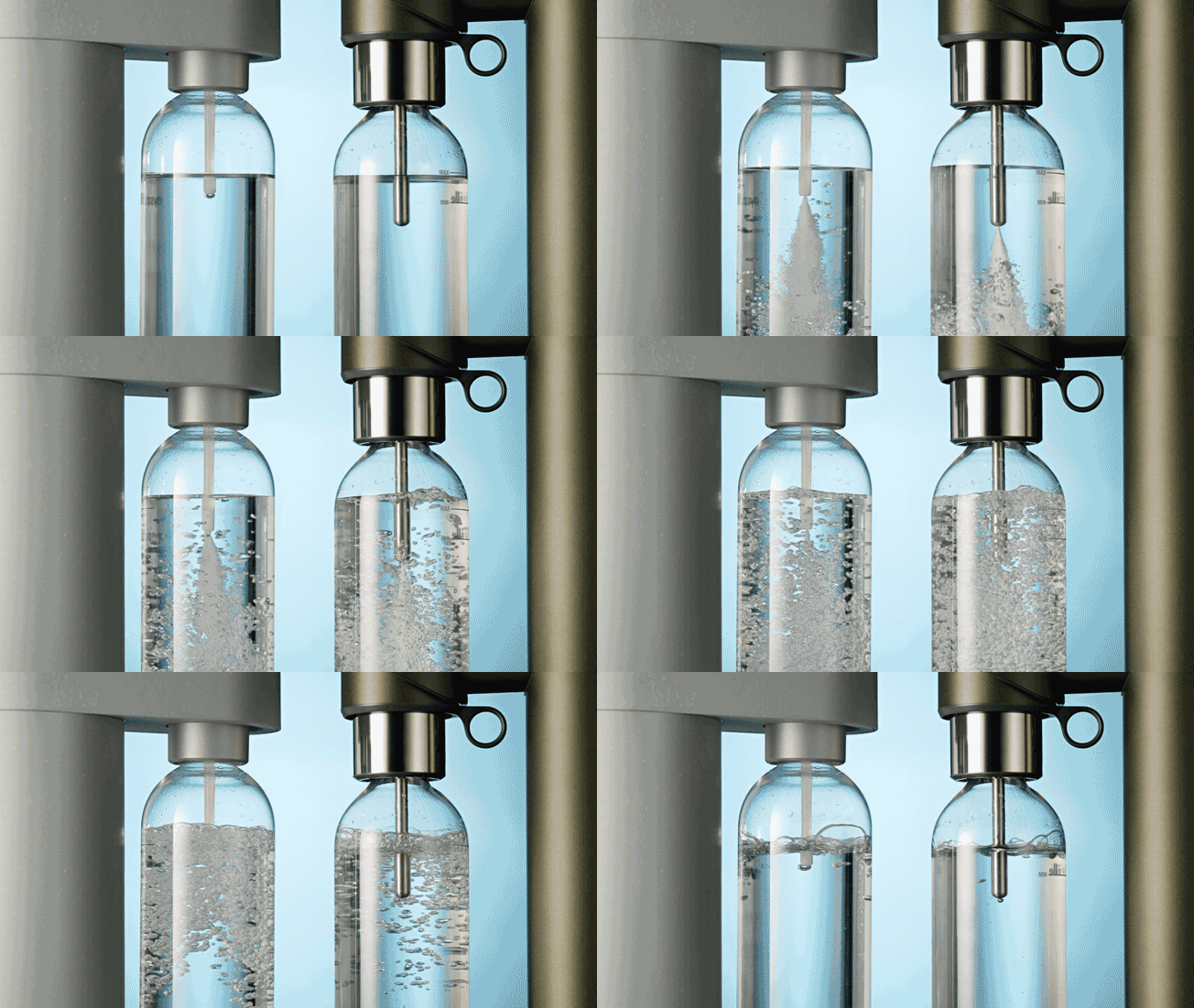
Get rid of the mountain of seltzer cans in your recycling bin. We tested the iconic Sodastream and five other soda makers.
Not all soda makers are created equal.
By Angela Lashbrook
If the recycling sanitation workers have a least favorite house on each block, it just might be mine. My family consumes an unfathomable amount of canned seltzer, with financial and environmental implications I can’t bear to face. (Okay, fine: The brutal truth is that we probably buy two 12-packs of La Croix each week, which is about $54 a month—or $648 a year.)
One obvious potential solution: an at-home soda maker. The category has diversified in the past few years, so now there are products at a wide range of prices, with variations in features, quality, and aesthetics (because the design of the products you have sitting out on your kitchen countertop matters!).
We tested six popular soda makers (only one of which requires electricity), assessing them first and foremost on the quality of their seltzer, along with numerous other critical criteria. We ended up with a handful of impressive winners and quite a few duds. As for whether I’m willing to make the jump from aluminum-can overconsumer to chronic sparkler of water? Perhaps come the holiday season, provided I actually manage to change my fridge water filter by then.
How Long Does It Take for a Soda Maker to Pay for Itself?
A soda maker can save you money in the long run if you’re willing to put in the work of buying carbon dioxide canisters regularly and you have chilled (and filtered, depending on your personal taste) water when you need it. We calculated this number by dividing the cost of each machine plus one canister by the price of a 12-pack of La Croix ($6.59 at the time I wrote this). In other words, if you purchased x number of packs of La Croix, you could have purchased this machine and a canister instead. The continued cost is, obviously, much cheaper as well: A typical 60-liter CO2 canister costs $32, making each liter of seltzer about 53 cents. Contrast that with La Croix, which at $6.59 for a 12-pack amounts to about $1.55 a liter.
Sneak Peek: A brand name synonymous with “soda maker,” the Sodastream Terra rests on its laurels, at least according to our tests, while a vacuum cleaner company smashes the competition.
Ninja Thirsti Drink System and Soda Machine
AT A GLANCE
Pros: Long-lasting bubbles, easy to use, customizable
Cons: Only makes cups (no storage option)
Ease of use: This brilliant machine wins our praise not only because it makes reliably sparkly water that lasts (not a feat every machine accomplished in our tests) but also because it is exceedingly easy to use—despite how customizable it is. You fill the water reservoir with water and ice, place a cup beneath the dispenser, and then choose how much seltzer you want and how bubbly you want it before pressing “Start.” Easy as pie (or a pod espresso).
Carbonation: We also like that the machine’s three bubbliness settings take the guesswork out of making seltzer if you have a particular level of carbonation in mind. The most carbonated option, which we all preferred, was maximum bloat-causing (delicious!), while the least carbonated was more along the lines of sparkling mineral water, albeit with bubbles that were less fine and silky. Carbonation didn’t last well overnight, but because the Thirsti doesn’t come with its own bottles, we can’t say for sure if that was because of the bottle we used (an extra from the Fizzpod set) or some inherent weakness of the Thirsti’s bubbles.
Noise: This was the quietest machine we tested, producing a brief, gentle hiss rather than the screech of most other machines.
Flavors: This is one of the few soda makers we tried that has flavors, which you have to buy separately. They’re easy to use; you simply pop them into slots directly above the dispenser, then choose a flavor level and, if desired, a combo option (such as if you want a soda that’s both “strawberry kiwi” and “tropical pineapple” flavored) in addition to the size and carbonation settings. We tried the “low-calorie variety pack,” which includes cola, lemon lime, and “Dr. Thirsti” (which we think is supposed to taste like Dr. Pepper) flavor drops. Each pod contained enough flavor for about 17 12-ounce drinks, according to the brand. We thought the flavors were good, although perhaps not as good as the drinks they were meant to replicate. That said, if you like, for example, Sprite but wish it were less sweet, this machine is a great way to experiment with creating that. At the time of writing, Ninja was selling a couple of dozen flavor options, including some that contain electrolytes, iced tea flavors, and more. (Consumer Reports’ dietitian, Amy Keating, says that the flavors we tried contain additives that may be better to avoid.)
Bonus: The ability to add ice to the reservoir is a major—and unique—advantage. With most machines, if you don’t have chilled water at the ready, your seltzer will be room temperature. Provided you have ice, this machine skips the forethought requirement, which I—who have never been especially talented at forward-thinking, even less so since having a kid—greatly appreciate.
A couple of downsides to this machine: It doesn’t come with its own bottles for storing seltzer because it’s meant to dispense directly into a glass or pitcher (12 or 24 ounces). The flavor drops, or at least the ones we tried, require that you take off the plastic wrap packaging, though the bottles themselves aren’t labeled.
But all in all, the Ninja Thirsti is a winner. Plus, it sings a little song when it’s done creating your drink.
MySoda Woody
AT A GLANCE:
Pros: Less expensive (relatively speaking), makes very sparkly water
Cons: Instructions could be better
I realize that calling a $75 soda machine a “value pick” or “budget pick” may seem a bit tone-deaf, as that isn’t exactly cheap—and it does, after all, only do one thing. But we can confidently recommend this product, while we can’t recommend the only model in our lineup less expensive than this one.
Ease of use: This machine is intuitive to set up. But the instructions are somewhat misleading: They say to “stop [carbonating] when you hear a hissing sound,” but this model, and every machine we tried, hisses throughout the carbonation process, so that’s not an especially helpful tip. This is a minor quibble, and it’s not difficult to adjust the carbonation level of the bottle by merely pressing the carbonation button for less time. (But nothing compares with the ease of the Ninja when it comes to creating drinks that match one’s taste more exactly.)
Carbonation: This machine produces a very sparkly cup, should that be your desire. The bubbles also last well overnight in the MySoda Woody bottle, with drinks tasting almost as carbonated the next day as they did out of the gate. Impressive!
Noise: The Woody was the second-most quiet model we tested.
Bonus: The Woody looks nice, with a matte “renewable wood-composite” construction that comes in sage green (“Pigeon”), white, and black.
Breville BCA800BSS InFizz Fusion
AT A GLANCE:
Pros: Attractive, very easy to use, can carbonate liquids other than water
Cons: Expensive, the instructions leave something to be desired
Ease of use: The InFizz Fusion is easy to operate, with a lever you push down to release carbonation into the bottle. This is a simpler and smoother option than the button on the front of most of the machines we tested, indicative of the Breville’s thoughtful design. It doesn’t much affect the actual mechanics of operation, but reveals that Breville gave consideration to whether or not there might be a better way to dispense carbonation into the bottle compared with the design status quo. Think of how a nice pen, for example, has a smoother flow on a piece of paper than an inexpensive one, or how a high-end T-shirt feels both softer and more substantial on the body than an inexpensive one. It’s not necessary. It just feels better.
The cap, though. According to Breville, it “gives you control over the release of CO2. Fast or slow, depending on the type of carbonated drink.” Over the course of the couple of days when our team tested these machines, it wasn’t quite clear how we could best put this apparently special bottle cap to use, and the instructions that came with the box didn’t elucidate. (And at the time of this writing, a link to the company’s “Product Hub,” which might offer more information on how to get the most out of the InFusion, led nowhere.) But as a plain old cap, it worked! It kept the bubbles in.
Carbonation: The Breville can make very bubbly seltzer, but the easy-to-handle carbonation function makes it straightforward to customize if you desire a more lightly carbonated drink. The bottle, with its heavy, not immediately comprehensible FusionCap (more on this in a second), retained bubbles overnight beautifully, with a beverage nearly as carbonated the next day as it was right after making. Most seltzer makers we tested were designed only to carbonate water, but the Breville allows the carbonation of other beverages, too.
Noise: This is the second-quietest machine we tried, with the characteristic soda-maker hiss and screech sounding more like a hiss and hum.
Bonus: We won’t sugarcoat it: This is a pricey machine. It rings in at $250, $70 more than our Top Pick, the Ninja Thirsti, and didn’t do that much more than any other soda maker on our list. But it did make very good sparkling water, and it looks nice, coming in six elegant colors. If aesthetics are important, and you don’t mind paying for the pleasure, the Breville InFizz Fusion is for you.
Other Soda Makers We Tested
Sodastream Terra
AT A GLANCE:
Pros: Sodastream sells flavor drops and lots of accessories
Cons: Seems inexpensively made, the water wasn’t super bubbly, the flavors we tried were gross
Ease of use: The machine itself felt lightweight and inexpensive, and made a horrible nails-on-a-chalkboard noise when moved across a counter. The setup was imperfect; it was difficult to know when the carbonation canister was fully inserted into the machine, which wasn’t a problem with any of our winners.
Carbonation: The water wasn’t super bubbly, even when we carbonated it for as long as we thought was safe and recommended (the instructions didn’t make this clear). It was nearly flat and undrinkable after a night stored in the Sodastream bottle in the fridge.
Noise: The Terra hit the midrange of our noise tests.
Bonus: Sodastream is one of the few brands that sells flavors for its soda machines. We tried some from the brand’s Variety Pack, a collaboration with the sparkling water flavor brand Bubly, and were repulsed. I found the grapefruit flavor nausea-inducing, though other testers could barely taste it. (I was pregnant at the time, to be fair.) One tester said the Bellini Bliss flavor “makes my esophagus feel warm.” (Yikes?) Cherry flavor “tastes like straight cough syrup,” said another tester. Cough syrup in a bad way. It’s possible that other flavors available from Sodastream are better, but we didn’t sample them. Keating, the CR dietitian, says that the ones we tested contain natural flavors (which aren’t necessarily any better than artificial ones) and other additives like caramel color, sucralose, and acesulfame K that you may want to avoid.
The Sodastream Terra feels like a product resting on its laurels. It’s long been the go-to for at-home soda makers, with the term “sodastream” almost synonymous with the product category. And yet we were neutral on the Terra, which didn’t result in water as bubbly as that from our winners.
Philips GoZero Soda Maker
AT A GLANCE:
Pros: None
Cons: Extremely loud and unpleasant-sounding, doesn’t make very bubbly water, setup is unclear
Ease of use: Similar to the Sodastream Terra, it wasn’t clear when the carbonation canister was completely inserted. I attempted to make a bottle, ended up with entirely flat water, and had to experiment to figure out that an incompletely inserted carbonator was the issue. Because I couldn’t find a reliable way to tell if the canister was properly installed, this could be a problem.
Carbonation: The water from this machine was especially bubbly, even when carbonating at what felt like the max allowable level (when the screaming reached an unbearable volume). The following day, the water was nearly flat, indicating that the bottle couldn’t retain the mediocre carbonation for long.
Noise: The Philips screamed while making seltzer. It sounded like it was being tortured. Among this product’s many unsavory qualities, the screaming was the worst. It was the loudest machine we tested.
Drinkpod Fizzpod Soda Machine
AT A GLANCE:
Pros: You can carbonate other liquids besides water
Cons: Loud, feels flimsy, had odd, mysterious white powder on the interior
Ease of use: The Fizzpod felt cheaply made, and it was a bit difficult to fasten the pieces together. You’re also supposed to shake the bottle before opening it after carbonating, which isn’t what you’re typically supposed to do with carbonated beverages.
Carbonation: The water was somewhat flat after carbonating and was completely flat after storing until the next day.
Noise: The machine was the second loudest we tested.
Bonus: This machine is so lightweight and flimsy that it felt like a children’s soda machine toy rather than an actual kitchen tool. (Drinkpod, however, claims that “our drink carbonator is crafted from sturdy components to last for longer. This machine has passed the ultrasonic test and blast test (15 kg+) with flying colors.”) The pieces offered some resistance when I put the machine together, and the interior (where the carbon dioxide canister lives) was coated in an unidentified white dust. I don’t think this presented a health issue because the bottle and cup didn’t touch that area of the machine. But it was a bit unsettling.
How We Tested
We tested these six machines in our Consumer Reports labs in Yonkers, N.Y. We employed a robust methodology that involved making multiple bottles—or cups, in the case of the Ninja Thirsti—of sparkling water, using refrigerated filtered bottled water for each test. (Different regions have different flavor profiles in their tap water, which can skew results and make for a “less pure” taste.) If a company sold flavors compatible with its soda machine, we purchased and tested at least three cups of three available flavors. We used a decibel meter to record the baseline room noise, then measured each machine’s noise level.
We conducted the tests with these criteria in mind:
How straightforward and easy was it to assemble the machine and install the CO2 canister and bottle?
How easy was it to customize the carbonation level of the bottle or cup of seltzer?
How tasty was the water at the machine’s maximum possible level of bubbliness? (We compared the bubbliness of the water to the carbonation of one of our top seltzer picks, La Croix Pure.)
How bubbly was the water after being stored in the fridge overnight in the machine’s bottle?
How loud was the machine while in use?
How attractive was the machine?
How tasty were the flavors?
Consumer Reports is an independent, nonprofit organization that works side by side with consumers to create a fairer, safer, and healthier world. CR does not endorse products or services, and does not accept advertising. Copyright © 2026, Consumer Reports, Inc.