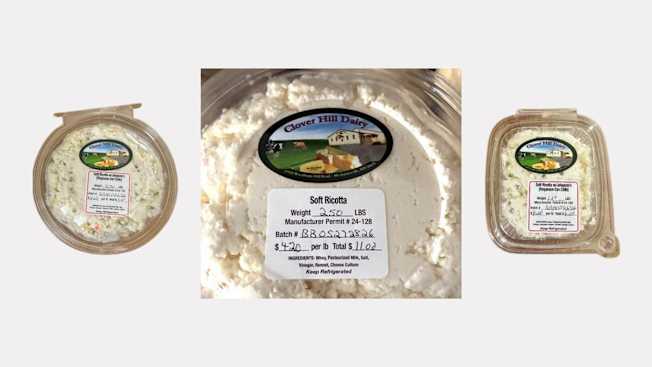
The products have been recalled
The cheese was sold in individually packed clamshell containers.
By Lisa L. Gill
Clover Hill Dairy announced a recall of its soft ricotta and requeson cheese after state and federal health officials linked the products to a listeria outbreak across multiple states.
Listeria can cause serious and sometimes fatal infections in young children, older adults, those with a weakened immune system, and pregnant people. Nine people have become ill in this outbreak. Eight of them were hospitalized, and one person died.
The recalled cheese was distributed in Maryland, New Jersey, New York, North Carolina, Virginia, and Washington, D.C. from May 4 through May 30, 2026, and may have been sold in other states as well. Some of the cheese may have jalapeño or other flavorings.
The company is recalling 10-, 12-, and 14-ounce clamshell containers with the plant or manufacturer permit number 24-128 stamped on the product label. The cheese was also sold in bulk and could have been repackaged under the brand names Kesso, Quesos, La Ricura, Izalco, De Mi Pueblo, and Rio Lindo.
Clover Hill Dairy was made aware of the potential public health risk by the Maryland Department of Health, which said in a statement that it had suspended the company’s operating license.
The company said in its recall notice that it sincerely apologized for any inconvenience and hardship caused by this recall and hoped to correct the problem as soon as possible.
Anyone with recalled cheese can return it to the place where it was purchased for a refund.
“Listeria are bacteria that can not just survive but multiply and grow in cold temperatures,” says Sana Mujahid, PhD, senior manager for food safety research and testing at CR. “And once it’s found in a processing plant, it’s really tough to eradicate it.”
Listeria causes fewer illnesses each year than other foodborne bacteria, such as salmonella or E. coli. When illness does occur, usually within two weeks of exposure, symptoms can range from fever, vomiting, diarrhea, and muscle aches that last a few days to potentially life-threatening damage to the brain and spinal cord. Very young children, people 65 and older, and those with compromised immune systems are more likely to get a listeria infection and become very ill.
Pregnant people are also at greater risk of serious infection. “Listeria can sicken an unborn baby because it can cross the fetal-placental barrier, which normally protects the fetus,” Mujahid says. Soft cheeses are prone to listeria contamination, which is why it’s safest to avoid all ricotta, queso, and other soft versions while you’re pregnant, according to Mujahid. Deli meats, raw and smoked seafood, and alfalfa and bean sprouts—all of which have been involved in listeria outbreaks and recalls in recent years—are other risky foods during pregnancy.
Anyone with questions about the recalled cheese can call the Southern Maryland Agricultural Development Commission at 240-528-8850, ext. 327, Monday through Friday from 8:30 a.m. to 4:30 p.m. EST.
Consumer Reports is an independent, nonprofit organization that works side by side with consumers to create a fairer, safer, and healthier world. CR does not endorse products or services, and does not accept advertising. Copyright © 2026, Consumer Reports, Inc.