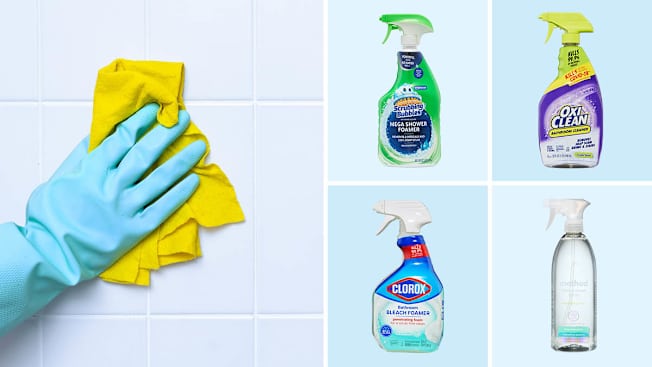
We tested 12 from Zep, Wet & Forget, Lysol, Clorox, and more, including scrub-free formulas, to find which ones really tackle soap scum, hard water, and oil.
We tested 12 shower cleaners, including products from Scrubbing Bubbles, OxiClean, Clorox, and Method.
By Jodhaira Rodriguez
The shower is one of the trickiest parts of my home to keep clean. Soap scum, hard-water stains, residue from my body wash, hair products, and hair dye all stick to the surfaces like glue. And because I have a deep tub, I have to get down on my hands and knees to scrub when it’s time to clean. The whole process takes way more effort and time than I’d like. And that’s on the days that I don’t have to use a grout cleaner to scrub away the mold and mildew stains.
Lots of bathroom cleaners are claimed to lift stains without scrubbing, rinsing, or wiping, and to even prevent stains from forming when applied daily. But for as long as I’ve been cleaning, I can’t remember trying any that have wowed me enough to repurchase.
I jumped at the opportunity to test a dozen shower cleaners in our lab, hoping to find a scrub-free option that would make my bathroom cleaning a little easier. To find the best ones, we applied a mixture of grated bar soap and hard water (to mimic soap scum), and oily residue to ceramic and porcelain tiles. We cleaned each tile following the directions on each shower cleaner’s label, rinsing, wiping, and scrubbing only when explicitly instructed.
CR partner SkinSafe provided us with data on the ingredients in each shower cleaner. It identifies the presence of the 11 most common allergens, based on Mayo Clinic data. Higher scores indicate fewer allergens. The highest score a product can earn is 100.
Sneak peek: All the shower cleaners we tested worked, as long as we made sure to cover the entire surface, but some required fewer applications and less effort. None of the scrub-, rinse-, or wipe-free options we tested left our test tiles completely clean of messes after a single application. The products that are claimed to prevent soap scum buildup worked pretty well at that one task, but one stood out as both a soap scum preventer and cleaner: Method Daily Shower Spray. It removed existing stains, prevented new ones from forming, and smelled great. It wasn’t the winner, though. Read on to get the full results.
Scrubbing Bubbles Mega Shower Foamer
Safe surfaces: Safe to use on glazed ceramic tile, chrome fixtures, acrylic, brass, countertops, glazed porcelain, sealed stone, shower doors, tile and grout, and the tub. Acrylic and brass are listed as both safe and unsafe surfaces to clean with this product. We contacted SC Johnson, the makers of Scrubbing Bubbles, to clarify this information but did not hear back by the time of publishing. Take extra caution when cleaning these surfaces, and test in an inconspicuous area first.
Do not use on: Acrylic, brass, and natural marble or other “untreated” natural stone surfaces.
Performance: Quite a few shower cleaners we tested performed well enough, but Scrubbing Bubbles performed best. It left all of our test tiles spotless. It excelled at removing hard water, soap scum, and oily residue. The brand does not claim that this cleaner can remove mold or mildew stains. It is also not a disinfectant.
Ease of use: This shower cleaner dispenses only in a wide, foaming pattern. Three sprays were required to cover each tile used in our tests. It smells strongly but doesn’t cause any discomfort when breathing. After letting the product sit on the surface for a few minutes, just wipe and rinse—no scrubbing needed.
It is not listed in SkinSafe’s database.
OxiClean Bathroom Cleaner
Safe surfaces: Bathtub, faucet, sealed granite, shower door, shower area, chrome, glass, glazed ceramic, glazed porcelain, glazed tile, plastic laminate, stainless steel, and most bathroom surfaces.
Do not use on: The brand does not list any surfaces as being unsafe to clean with this product.
Performance: This cleaner excelled at removing soap scum, hard-water stains, and oily residue from ceramic and porcelain surfaces.
Though it does not contain bleach, it is registered with the Environmental Protection Agency as a disinfectant. According to the brand, it “kills 99.9% of bacteria and viruses.” The formula contains hydrogen peroxide.
Ease of use: The spray pattern for this nonfoaming formula is not as wide as some others, and it required three sprays to cover all of the tiles’ surface. It required just one wipe with a damp microfiber cloth to leave our test tiles spotless. Its scent is quite strong, and it tickled our noses a bit when we first dispensed it.
SkinSafe assigned this cleaner a score of 91. It is not free from fragrance, propylene glycol, balsam of Peru, or irritants.
Zep Shower, Tub & Tile Cleaner
Safe surfaces: Acrylic, fiberglass, ceramic tiles and porcelain, laminate, and Corian.
Do not use on: Marble, granite, terrazzo, and natural stone surfaces should not be cleaned with this product.
Performance: While this shower cleaner doesn’t have the lowest price per ounce, it is the least expensive of the top performers in our tests. It left tiles with soap scum and hard-water stains completely spotless after wiping with a damp sponge and rinsing. The oily residue was visible only along the outer edges of the tiles, where the cleaner did not fully saturate them. Ensuring the solution covers every inch of the surfaces being cleaned will likely lead to better results.
Ease of use: This shower cleaner is strongly scented, but it is not uncomfortable as long as it is used in a well-ventilated area. It has two dispensing modes: a very wide and a concentrated stream.
Zep Shower, Tub & Tile Cleaner has a score of 91 in SkinSafe’s database. It is not free from fragrance, balsam of Peru, or irritants.
Clorox Bathroom Bleach Foamer
Safe surfaces: Grout, tile, tubs, fiberglass, glass shower doors, vinyl curtains, counters, sinks, and no-wax floors. The brand recommends rinsing immediately after applying it to rubber, plastic, vinyl, metal, and old porcelain.
Do not use on: This cleaner contains bleach; take care not to get any on your clothing to avoid discoloration. According to Clorox, prolonged contact with metal and old porcelain could cause a rusty stain to appear on the surface.
Performance: Spray, allow to sit, wipe, then rinse. That’s all it took for the ceramic and porcelain tiles used in our testing to appear spotless with this bleach-powered shower cleaner. We did not test against mold and mildew stains, but Clorox is claimed to kill “99.9% of mold and mildew.” It also is claimed to kill “99.9% of viruses and bacteria.” To disinfect surfaces, the cleaner must be in contact with a surface for 5 minutes before rinsing.
If you prefer using a bathroom cleaner that kills viruses and bacteria, look for an EPA registration number on the label. Any cleaning products proven to do so must be registered. This was the only product we tested containing bleach. It is one of three EPA-registered disinfectants we tested.
When using this shower cleaner, refrain from spraying any fabrics because the bleach can damage them. In our lab, it caused a sponge to lose its color and become yellow.
Ease of use: This shower cleaner’s formula is foaming and dispenses in a medium spray pattern. It required three sprays to cover each of the tiles. Like most products containing bleach, it’s strongly scented and requires ample ventilation when used.
SkinSafe assigned the Clorox Bleach Foamer a score of 91. It is not free from balsam of Peru or fragrance.
Method Daily Shower Spray
Safe surfaces: Showers, tiles, fixtures, glass, and tubs.
Do not use on: Method does not list any surfaces as being unsafe to clean with this shower cleaner.
Performance: This shower cleaner, which makes soap scum-prevention claims, also performed well as a regular cleaner. All the others with prevention claims prevented stains from happening but didn’t clean existing ones very well. Method’s Daily Shower Spray didn’t leave the tiles spotless after one application, but it did significantly lighten the stains.
As a stain-preventer, small spots of soap scum, hard water, and oil were visible on the tiles along the outer edges, where the product did not fully saturate the surface. The rest of the tiles were clean. Ensuring the entire surface is covered with the cleaner would likely yield better results.
Ease of use: The instructions on the label are a bit confusing. On one side, it said, “just spray and walk away,” but immediately under says, “spray, wipe, admire,” so it’s unclear if it needs to be wiped or not. We opted to wipe with a damp microfiber cloth to ensure the likeliest positive results. After our tests were completed, we reached out to Method’s customer service. It said that no wiping or rinsing was necessary.
SkinSafe says this shower cleaner is not free from fragrance, common preservatives, coconut, irritants, balsam of Peru, and methylisothiazolinone/methylchloroisothiazolinone. It has a score of 82.
Lysol Power Bathroom Foamer
Safe surfaces: Glazed porcelain and ceramic tile, stainless steel fixtures, laminated plastic, shower doors, vanity tops, sinks, chrome fixtures, and linoleum.
Do not use on: Marble, no-wax vinyl, brass, and copper. The Power Bathroom Foamer can “discolor painted surfaces including decorative tile and colored grout.” It may also etch older sinks and tubs.
Performance: Rounding out our top performers is this foaming cleaner from Lysol. It excelled in three of our four tests, leaving small oily spots just on the porcelain tile. All other tiles were totally clean after a single application. Considering it requires allowing to sit, wiping, and rinsing, it was not surprising that it worked as well as it did.
Even though it does not contain bleach, it is an EPA-registered disinfectant, with citric acid acting as its only active ingredient. To sanitize surfaces, the product needs to sit for 30 seconds untouched. To disinfect surfaces, you have to allow the cleaner to sit for 10 minutes before wiping and rinsing.
Ease of use: Because this cleaner is dispensed in a concentrated spray, it required a couple of extra sprays to completely saturate the ceramic and porcelain tiles we used in our tests. The formula foams, and its Atlantic Fresh scent is strong but pleasant.
It has a SkinSafe score of 91. It is not free from fragrance, SLS, propylene glycol, balsam of Peru, or irritants.
Other Shower Cleaners We Tested
All of the shower cleaners we tested worked at least partially, but these six didn’t stand out from the crowded competition because they required more applications, didn’t prevent stains from forming, or were messy to use. Overall, they just weren’t as good as the six we recommended above.
The Pink Stuff The Miracle Daily Shower & Shine Cleaning Spray
Safe surfaces: Fiberglass, porcelain, chrome, tiles, glass, plastics, acrylics, and shower curtains.
Do not use on: Worn, damaged, or cracked surfaces, gold-plated fittings, brass, natural marble, untreated natural stone surfaces, polishes, painted and oiled wooden surfaces, or resurfaced enamel.
Performance: This shower cleaner is claimed to work without scrubbing or wiping. All you have to do is rinse before your next shower. Unfortunately, like most others we tested, it didn’t leave our ceramic and porcelain tiles very clean. It performed a little better against soap scum and hard water. There was very little effect on the existing oily stains.
As a stain-preventer, it worked very well against soap scum and hard water, but the porcelain tile we applied the oily mixture to was among the worst. The Pink Stuff’s shower cleaner did very little to prevent oil from sticking to the tiles.
Ease of use: This shower cleaner dispenses in a wide spread that covers a large area with just one spray. It does not foam and leaves behind a light, clean smell.
According to SkinSafe, it is not free of common preservatives, irritants, fragrance, dyes, and balsam of Peru. It has a score of 82 in the database.
Wet & Forget Weekly Shower Cleaner
Safe surfaces: All bathroom surfaces, including showers, tubs, sinks, counters, glass shower doors, toilets, and fabric shower curtains. Sinks, counters, and toilets must be immediately rinsed after application.
Do not use on: Natural marble is the only surface the brand mentions as being unsafe to clean with this shower cleaner.
Performance: It cleaned soap scum and hard-water stains from ceramic tiles very well but struggled with oily residue on both types of tiles we tested.
When we tested its ability to prevent stains, we found that dull, hard-water stains still built up on the ceramic tile. The porcelain tile was nearly spotless. It prevented oily residue from adhering to both tiles well.
Ease of use: According to the directions, this shower cleaner works best if you let it sit for 8 to 12 hours before rinsing, so we waited at least that long in our tests. After achieving a clean shower with a few daily sprays, the instructions say you then just need to use this cleaner once a week to maintain the cleanliness.
This cleaner is packaged in a large 64-ounce container. Thanks to an attached hose, you can place the container on the floor and reach all corners of a shower easily. It has both a concentrated and a wide spray option. The instructions are printed clearly on the label.
Wet & Forget Weekly Shower Cleaner is not listed in SkinSafe’s database.
CLR Brilliant Bath
Safe surfaces: Ceramic, porcelain, chrome, fiberglass, sealed granite, plastic, glass, and stainless steel.
Do not use on: Natural or synthetic stone/marble, aluminum, nickel, bronze, brass, copper, mirrors, wood, colored grout, wall coverings, painted, coated, or sealed surfaces, plastic laminates, or fabrics and carpets.
Performance: This shower cleaner requires application, waiting, wiping, allowing it to sit for 2 to 3 minutes, then rinsing. Considering all this, the results were disappointing. When inspecting the soap scum and hard-water-stained tiles, they appeared clean from a distance, but upon closer inspection, the stains were still visible, just lighter. It performed better against soap scum and hard water than against oil.
Ease of use: The only dispensing mode for this shower cleaner is a concentrated, foaming stream. While many of the other shower cleaners we tested required just one or two sprays to cover the entire tiles, this one required four sprays.
SkinSafe gave CLR Brilliant Bath a rating of 91. It is not free from fragrance, irritants, propylene glycol, and balsam of Peru.
Grove Co. Daily Shower Cleaner
Safe surfaces: Glass, tile, and tubs.
Do not use on: There are no surfaces listed as being unsafe to clean with this cleaner, but Grove Co. recommends testing a small, inconspicuous spot on fixtures.
Performance: The oily residue we applied to the ceramic tiles remained after one application, with no wiping or rinsing. Against soap scum and hard water, it fared better. There were some streaks left behind, but the tiles were mostly clean.
Grove Co. makes no claims about its shower cleaner’s ability to clean or prevent mold and mildew stains.
Left: Porcelain tile after cleaning with Grove Co. Daily Shower Cleaner. Right: Ceramic tile after cleaning with Grove Co. Daily Shower Cleaner.
Photos: Consumer Reports
Ease of use: There are two dispensing modes: wide and concentrated. The formula is not foaming, and the wild mint scent is light and sweet. SkinSafe assigned this shower cleaner a score of 91. It is not free from fragrance, oil, coconut, balsam of Peru, and irritants.
The bottle this shower cleaner is packaged in is made of aluminum and is “infinitely recyclable,” according to the brand.
Clean Shower Daily Shower Cleaner
Safe surfaces: Tiles, tubs, curtains, vinyl shower curtains, shower doors, and all wet surfaces.
Do not use on: Damaged surfaces, refinished tubs, or natural stone or natural marble. The brand also recommends testing on a small, inconspicuous area if you have specialty finishes on your bathroom surfaces.
Performance: Clean Shower Daily Shower Cleaner is another model that recommends application after a shower has already been cleaned. Because it also is claimed to prevent “the buildup of soap scum, hard water, and other stains,” we conducted two tests with this cleaner: on dirty tiles and on clean tiles.
We applied it to our dirty tiles and let it sit overnight. The porcelain tile was almost free of soap scum and hard-water deposits, but the oily residue remained. About half of the soap scum and hard water was cleaned from the ceramic tile. None of the oily residue was removed from the ceramic tile.
After a applying the cleaner to two clean tiles and allowing to dry, we painted a thin layer of our lab-made messes over the top and let them sit overnight. When we rinsed the tiles, we found that it had done a great job of preventing soap scum and hard water from forming. It did not prevent oily residue from forming on the tiles’ surfaces.
We did not test against mildew stains, but Clean Shower claims this formula can remove them, too.
Left: Porcelain tile after cleaning with Clean Shower Daily Shower Cleaner. Right: Ceramic tile after cleaning with Clean Shower Daily Shower Cleaner.
Photos: Consumer Reports
Ease of use: The instructions printed on the label were very clear. This is the only shower cleaner that dribbled on my hands when dispensing. Its no-foam formula is dispensed in a wide spray pattern.
According to SkinSafe, it is not free from coconut, common preservatives, dyes, fragrance, propylene glycol, and balsam of Peru. It has a score of 82.
Its fresh, clean scent is stronger than some other shower cleaners we tested, but it is not unpleasant.
Mrs.Meyer’s Probiotic Daily Shower Spray
Safe surfaces: Tiles, tubs, acrylic walls, and grout.
Do not use on: There are no unsafe surfaces listed on the product’s label or website.
Performance: Of the 12 models we tested, this one was the least effective after one application. According to the directions on the label, you just have to spray the shower’s surfaces after cleaning the shower and walk away. The brand claims that “it works gradually and cleans within 7 days if used daily.” No rinsing, scrubbing, or wiping required.
We wanted to know how it would work on a dirty shower, though, so we applied it to the tiles covered in our lab-made messes. The soap scum and hard-water stains were unchanged after an initial application and after allowing the cleaner to sit overnight. A lot, but not all, of the oily residue was cleaned from the tiles.
After rinsing with distilled water, a second application of the cleaner was sprayed onto the tiles. This time, more than half of the soap scum and hard-water stains were gone. The oily residue was nearly gone from both the ceramic and porcelain tiles.
If you don’t mind living with a yucky shower for a few days before enough applications of the cleaner have happened, this could work for you.
Although the manufacturer says that this product is effective against mold and mildew, we did not include those specific stains in our tests.
Left: Porcelain tile after cleaning with Mrs. Meyer’s Probiotic Daily Shower Spray. Right: Ceramic tile after cleaning with Mrs. Meyer’s Probiotic Daily Shower Spray.
Photos: Consumer Reports
Ease of use: The instructions printed on the label are very clear and easy to follow. It is not foaming and has just one wide spray pattern. This formula is certified by the Department of Agriculture as a bio-based product. It has a SkinSafe score of 82. It is not free from fragrance, oil, coconut, balsam of Peru, common preservatives, irritants, and methylisothiazolinone/methylchloroisothiazolinone.
The lemon verbena scent we tested is pleasant and light.
A DIY Option: Dawn Dish Soap and White Vinegar
If you don’t have a shower cleaner at home, a mixture of Dawn Ultra dish soap and white vinegar can be used to remove soap scum and hard-water stains from your shower.
Photos: Consumer Reports, Getty Images
There was one hack for cleaning the shower that caught our eye during research: using a mixture of equal parts Dawn dish soap and white vinegar. We poured half a cup of white vinegar and half a cup of Dawn dish soap into a spray bottle and swirled it gently to mix. This is important because if you shake too aggressively, you end up with a bottle full of bubbles. We then tried it as a scrub-free and as a spray-and-wipe cleaner. If you try this at home, make sure to label the bottle you make the cleaner in so that everyone at home knows what’s inside.
Performance: Both methods yielded really great results, with the tiles wiped with a damp sponge appearing slightly cleaner than those sprayed and rinsed after 30 minutes. Though the tiles were not as clean as they were when we used one of the top-performing shower cleaners like Scrubbing Bubbles and OxiClean, if you ever find yourself with a shower emergency, this is a solid option.
Ease of use: There’s an extra step involved with this option, which is making your cleaning solution. That makes it a little harder to use than the other premade products we tested. Because dish soap is so sudsy, it also required a lot more rinsing than the other shower cleaners we tested.
How We Tested Shower Cleaners
To test each shower cleaner, we created two solutions to mimic soap scum, hard-water stains, and oily residue commonly found in a dirty shower. One solution contained hard water and shaved bar soap. The other solution was made using petroleum jelly, vegetable oil, and mineral oil. Two thin layers of each mixture were applied to a 12×12-inch ceramic and 11×13-inch porcelain tiles and allowed to dry overnight. Then each shower cleaner was applied to the tiles according to the instructions printed on the label.
The models that claimed to prevent messes from forming on shower surfaces were also applied to clean tiles. One thin layer of the two bathroom mess solutions was painted onto the tiles, allowed to dry overnight, and then rinsed with distilled water to prevent the formation of additional hard-water marks. If no soap scum, hard water, or oily stains formed on the surface, the product was considered effective at preventing messes.
Finally, we considered the ease of using each shower cleaner and took a close look at each product’s label, noting the clarity of the instructions, any safety precautions, and notable ingredients.
*Price at time of testing.
Consumer Reports is an independent, nonprofit organization that works side by side with consumers to create a fairer, safer, and healthier world. CR does not endorse products or services, and does not accept advertising. Copyright © 2026, Consumer Reports, Inc.