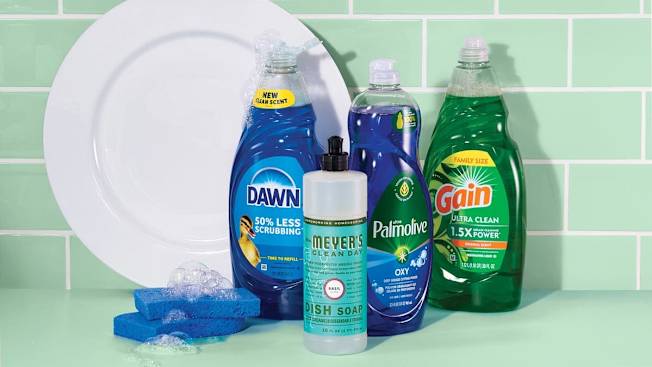
The top-rated dish soaps efficiently cleaned dishes without leaving our hands feeling dry
All of the dish soaps we evaluated cleaned dishes really well.
By Jodhaira Rodriguez
Dish soap is a kitchen cleaning essential, important for tackling those items that shouldn’t go in a dishwasher, such as pots and pans, chef’s knives, and wooden utensils. I have a dishwasher, but because I live alone, running it to clean a single plate, fork, and pan after each meal just doesn’t make sense.
When I run out of dish soap, I go to my local Target and grab the bottle I happen to see first in the soap aisle. I’ve never found that any products clean better or worse than the others, and many years ago, when CR last tested dish soaps, we came to a similar conclusion. The differences among products lie in other attributes, like scent, cost, and ingredients.
But we recently revisited that past finding. To see whether there were big differences (and to help you find the best dish soap), we evaluated 12 of the most popular dish soaps in our labs and at home. We looked at 10 liquid soaps and two solid soap bars.
We also used data from a CR partner, SkinSafe, about the ingredients in each dish soap. It provides product scores based on Mayo Clinic information on the most common allergy-inducing ingredients.
Dawn Ultra Dishwashing Soap
Dawn is the dish soap brand my mom has used for as long as I can remember, and it’s arguably the most well-known name in the dish soap business. In our evaluations, it took the longest amount of rinsing under a faucet to rid a kitchen sponge of any signs of it, an average of 2 minutes and 12 seconds. It also produced lots of thick suds on our sponge and in our sinks. When I washed eight dishes covered in ketchup and chicken tikka masala in a 3-liter bucket of warm water with half a tablespoon of dish soap, the amount of suds before and after washing remained unchanged.
The scent of Dawn dish soap can best be described as clean. No fruit, flower, or food is similar. My hands didn’t feel dry after washing dishes without rubber gloves. The handle on the side of the 56-ounce bottle was very convenient when pouring soap from the heavy container. Dawn also offers an unscented and dye-free version.
According to SkinSafe, this dish soap from Dawn is 82 percent free of the top 11 most common allergens. But it’s not free of balsam of Peru, fragrance, common preservatives, propylene glycol, methylchloroisothiazolinone/methylisothiazolinone (MCI/MI), sodium lauryl sulfate (SLS), and dye. It’s also not baby-safe.
*Based on Target’s price at the time of publication.
Mrs. Meyer’s Clean Day Dish Soap (Basil scent)
The basil scent of Mrs. Meyer’s dish soap was totally different from any other dish soap I’ve used. It’s light and herbaceous, and it was my favorite of the dish soaps I tried. The manufacturer says this soap is “inspired by the garden” both in its scent and “plant-derived” ingredients. The average amount of time it took to rinse this soap from a sponge was almost on a par with Dawn dish soap. Also, like Dawn, it produced rich suds. Even after washing eight dishes, there were enough suds in a bucket of water to continue doing dishes with it, though they were not as plentiful as they were before I began doing dishes.
The 16-ounce bottle was easy to lift and pour soap from. This scent and the others from the company are also available in a 48-ounce bottle that can be used to fill a smaller bottle.
Mrs. Meyer’s basil-scented dish soap earned an 82 percent score from SkinSafe. It’s not baby-safe and contains coconut, common preservatives, oil, SLS, fragrance, balsam of Peru, and MCI/MI.
*Based on Amazon’s price at the time of publication.
Palmolive Ultra Dish Oxy Power
This dish soap produced long-lasting suds every time we used it. A soapy bowl of water had as many suds post-dishwashing as it did before doing the dishes. The 32.5-ounce bottle was light enough to lift and pour from easily, even without a handle.
Palmolive’s smell is hard to describe as anything other than clean. Something else to note: This was the only dish soap I tried that made my hands feel dry.
This dish soap contains fragrance, SLS, dye, and Balsam of Peru. Even with a 91 percent score from SkinSafe, it’s labeled as not baby-safe.
*Based on Amazon’s price at the time of publication.
Gain Ultra Clean Dish Soap
Gain tied with Mrs. Meyer’s and Palmolive for the second place position in our evaluations—on its own, a great feat, but considering it costs 24 cents per ounce less than Mrs. Meyer’s, it’s pretty impressive. A soapy bowl of water showed little difference in suds after washing dishes, and the time it took to rinse a sponge holding 1.2 grams of dish soap in it was among the middle of the pack—about half as long as it took to rinse Dawn out.
The scent of this dish soap was very strong. It wasn’t totally unpleasant to me, but for someone sensitive to overpowering smells, it could be too much.
Gain is 82 percent free of the top common allergens, according to SkinSafe. It contains common preservatives, SLS, fragrance, propylene glycol, balsam of Peru, dye, and MCI/MI. Like most other dish soaps on our list, it’s also not baby-safe.
*Based on Amazon’s price at the time of publication.
Amazon Basics Dish Soap
Dish soap from Amazon Basics got through our test dishes without losing all its suds in a bucket of water. The time it took to rinse it from a sponge was as long as four other dish soaps. It’s available only in a 50-ounce bottle with no handle, so it was my least favorite to pour. But once I managed to lift the heavy container, I could easily control how much dish soap was dispensed by the length of my squeezes.
The scent is clean and reminds me of the laundry detergent my grandma uses or a lathered-up bar of Irish Spring Original Clean bar soap.
Of the top six dish soaps we tested, this one had the lowest SkinSafe score. It’s 73 percent free of the top common allergens. It contains coconut, common preservatives, balsam of Peru, SLS, fragrance, dye, and MCI/MI.
*Based on Amazon’s price at the time of publication.
Nellie’s Dish Butter
I have used Nellie’s Dish Butter for well over a year now. It isn’t inexpensive, but when I looked for an alternative to plastic bottles, it was my favorite dish bar. In our evaluations, it rinsed out of a sponge in just 31 seconds. It cleaned eight dirty dishes without needing to rub the sponge over the bar as I had to do with the Grove Collaborative Hand & Dish Bar Soap, below. When I dipped the sponge into a bucket of warm water, it actually made the water sudsy, which I didn’t see with the other dish bar.
It has a pleasant, herbal smell that was overpowering when I washed dishes. There’s no indication of the amount of soap in each bar anywhere on the product packaging, but when I reached out to Nellie’s, a brand representative said each bar should weigh 175 grams, but there may be slight fluctuations in weight.
Nellie’s Dish Butter is 91 percent free of allergens. Fragrance, coconut, and balsam of Peru are among the flagged ingredients in its formula. It’s not baby-safe.
*Based on Amazon price at time of publication.
Other Dish Soaps We Tried
Dawn Platinum Plus PowerSuds Liquid Dish Soap
Though the packaging of this dish soap boasts the claim “2x the suds” vs. Dawn Platinum, we didn’t find that to be the case. Nonetheless, the suds produced in a bowl of water were as rich as most of the other sudsy dish soaps we tested and remained so after washing eight dirty dishes. It cleaned well, had a pleasant scent, and didn’t dry my hands out. The 38-ounce bottle is comfortable to pick up, turn on its side, and pour soap from. It’s a great dish soap, like the other two dish soaps we tested from Dawn, but in a head-to-head comparison, I didn’t notice any significant differences in performance.
At 28 cents per ounce (based on the price at the time of publishing), it was the most expensive of Dawn’s three liquid dish soap products we tested.
*Based on Amazon’s price at the time of publication.
Dawn Platinum Dishwashing Liquid Dish Soap
The last of the three dish soaps tested, Dawn Platinum, is as good as the others. It produced rich suds in warm water, cleaned dishes easily, and was as easy to pour as the brand’s Ultra and Platinum Plus PowerSuds. Its smell is identical to Dawn Ultra—a clean, bright smell that doesn’t linger on dishes. I didn’t notice any dryness on my hands after washing a sink full of dishes.
*Based on Amazon’s price at the time of publication.
Method Dish Soap (Lime + Sea Salt scent)
Method’s dish soap had a very light lime scent that I enjoyed and a pump that made it the easiest of the dish soaps to dispense. But its consistency was noticeably more watery than any of the other dish soaps, and it produced far fewer suds in a bucket of warm water. It still cleaned dishes well.
*Based on Target’s price at the time of publication.
Ecos Plant Powered Dish Soap
This dish soap was the most expensive (38 cents per ounce) of the 12 products we tried. The suds it produced were weak, and by the time we finished washing eight dishes with it, they were almost completely gone. It smells of pear-flavored candy, sweet with a bit of a sour note.
*Based on Amazon’s price at the time of publication.
Seventh Generation Free & Clear Liquid Dish Soap
Although many of these products are available unscented, Seventh Generation Free & Clear Liquid Dish Soap was the only one that came only as fragrance-free. It didn’t have the chemical smell that I’ve often noticed with other fragrance-free cleaning products. Though there was a healthy amount of suds in a bucket of water when we started washing dishes, by the fourth plate, they had gone pretty flat. If I actually had been doing my dishes, I would have added more soap to the water by then. Rinsing this soap from a wet sponge took an average of just 49 seconds, the least amount of time required for any of the liquid dish soaps.
*Based on Target’s price at the time of publication.
Grove Collaborative Hand & Dish Bar Soap
Editor’s note: This product from Grove Collaborative is currently unavailable.
Right off the bat, this bar’s lack of suds when I rubbed a wet sponge on it was noticeably different from Nellie’s Dish Butter. After washing four dirty dishes, I had to wet the sponge and rub it over the soap bar again to get through the last four plates. When I dipped the soapy sponge in a bucket of warm water, no suds transferred from sponge to bucket. Its lime and ginger scent is hard to discern because it’s so light.
*Based on Grove Collaborative’s price at the time of publication.
Ingredients to Look Out for in Dish Soaps
With so many questions being asked about the ingredients in the cleaning products we use at home and their possible effects on our health and the health of our planet, I spoke with Shanika Whitehurst, CR’s associate director of product sustainability, research, and testing, about them. There are two things to look out for when shopping for dish soaps: fragrance and any claims of being antibacterial. “Fragrances can cause both skin and respiratory irritation due to the makeup of the perfumes and also possible phthalate exposure,” she said.
I’ve a hard time kicking all products with fragrance out of my home. The last time I used a fragrance-free laundry detergent, I ended up rewashing my sheets with scented detergent just a few days later because I couldn’t convince myself that sheets with no smell could possibly be clean. This is not the case.
As for dish soaps advertised as antibacterial, they could be doing more harm than good. “Soaps that advertise themselves as ‘antibacterial’ could have unintended impacts on your health and in the environment, by making bacteria resistant to chemicals intended to prevent them from causing illness,” Whitehurst said. So the next time you buy dish soap, skip the antibacterial kind. Your immune system will thank you.
How Much Dish Soap Do You Need to Use?
Only two manufacturers, Amazon Basics and Ecos, provided a recommended amount of dish soap on the product label that a consumer should use, which was 2 ounces and a quarter-sized drop, respectively. According to Dawn’s website, adding “a few drops of concentrated dish liquid” to a sponge is the amount it recommends.
Delah Gomasi, managing director and CEO at MaidForYou, a home cleaning service based in Sydney, told us that the amount depends on the manufacturer. Ken Doty, chief operating officer and cleaning expert at The Maids, a residential cleaning company with franchises in the U.S. and Canada, echoed this statement but added that though there’s no universal amount for all dish soaps, 30 milliliters in a gallon of water is a good place to start. If you find that you have tougher messes, you can add more soap in small increments.
Does Water Temperature Matter?
I usually wash my dishes with warm water, but I wondered whether the temperature really mattered. “Some messes that have caked-on oil and grease will be easier to clean if they’re soaked in warm to hot water before hand-washing,” Doty said. “Most stubborn messes are best washed in higher temperatures as opposed to cold.” Gomasi said that he had never encountered a mess that was cleaned better with cold water than hot water but that cold water was great for rinsing dishes that had already been cleaned with warm water and dish soap.
Phthalates in Soap
CR has reported before about the dangers of exposure to phthalates, chemical compounds commonly found in products that contain fragrance. They have been linked to a long list of health concerns, including birth defects, hormonal abnormalities, and reproductive problems. That said, even when there are fragrance-free options, some people (like me) aren’t ready to let scented products go.
How CR Tests Dish Soaps
I evaluated dish soaps based on the following criteria: the time it took to completely rinse a sponge of 1.2 grams of soap under running water (because those being harder to rinse means you can get through more dirty dishes before you have to relather your sponge); the amount of suds half a tablespoon produced in 3 liters of water; how sudsy the water remained after washing eight plates with brushed-on ketchup and chicken tikka masala on them; and how easy the soap was to dispense. I used a separate dish sponge, the Scotch-Brite Stay Fresh Non-Scratch Scrub Sponge, for each dish soap.
I also considered each soap’s scent and whether it left my hands feeling dry after washing a sink full of dishes. Using the information on ingredients that CR’s Whitehurst shared with us, we also reviewed the printed ingredients list of all the dish soaps to determine which ones contained ingredients we should avoid.
Consumer Reports is an independent, nonprofit organization that works side by side with consumers to create a fairer, safer, and healthier world. CR does not endorse products or services, and does not accept advertising. Copyright © 2026, Consumer Reports, Inc.