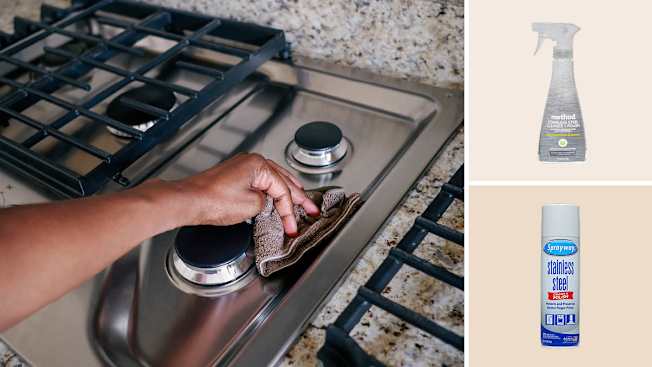
We cleaned filthy appliances using eight sprays, wipes, and aerosols by Bar Keepers Friend, Weiman, and others. Some cleaners cleaned well and left no streaks. Plus, we tried the dish soap-and-water hack.
The best stainless steel cleaners we tested lifted stubborn grime without excessive scrubbing and left no soapy streaks.
By Lisa Fogarty
Ah, stainless steel appliances—the bane of our cleaning existence.
When they gleam, they elevate the look of our kitchens. But when they get dusty and dirty (which seems to happen every other day), they’re a pain in the neck to clean. Stainless steel is not a surface on which you want to fool around with random multipurpose cleaners. Dedicated stainless steel cleaners are formulated to remove greasy fingerprints and leave a streak-free finish. Many also provide surfaces with a thin protective film that helps repel future smudges. General-purpose cleaners can clean surface dirt, but they may leave streaks, struggle with oily residue, or dull the finish.
To test eight stainless steel cleaners, including wipes, liquid sprays, and aerosol cans by popular brands like Bar Keepers Friend, Weiman, and Zep, we soiled half the side of stainless steel refrigerators and dishwashers in our labs with mixtures of flour and water and vegetable oil fingerprints. We left the debris on these surfaces for 3 hours, and then followed the directions on each product to see how well they cleaned and polished.
To ensure consistent results, we used Comet Microfiber Cloths to clean and buff each surface. The one exception was Bar Keepers Friend Stainless Steel & Polish, which comes with its own microfiber cloth. For this one, we cleaned it with both the Comet cloth and the included cloth to see if a different cloth made any difference. In addition to performance reviews of each product, this article includes information and safety ratings from our partner, SkinSafe, an organization that uses Mayo Clinic data to evaluate overall product safety, potential for irritation, and allergenicity. SkinSafe scores products based on the presence of the 11 most common allergens: The higher the score, the fewer allergens a product contains. The highest possible score is 100.
Tip: When cleaning stainless steel, always wipe in the direction of the metal’s natural grain. Then buff the surface with a clean, dry cloth. Avoid using steel wool or abrasive scrub pads. They can scratch the surface, making it more susceptible to moisture damage. In addition, tiny steel wool particles can become lodged in the stainless steel finish, where they may eventually rust and cause staining.
What Not to Use on Stainless Steel Appliances
There are several products you shouldn’t use on stainless steel if you want to preserve the integrity of your appliances. To start, don’t use disinfectants, abrasives, or cleaners containing bleach, alcohol, ammonia, or chlorides, because they can harm stainless steel. Skip the used dishrag when cleaning stainless steel. It can leave behind food oils and other residue that may dull the finish and gradually wear down the surface’s protective layer of chromium oxide, which helps prevent corrosion. Instead, reach for a clean microfiber cloth to keep stainless steel looking its best.
Can You Use Stainless Steel Cleaners on Fingerprint-Resistant Appliances?
Fingerprint-resistant stainless steel features a clear coating that protects appliances from fingerprints and keeps them looking shiny and new. But you can scratch this coating if you use stainless steel cleaning products on it (also avoid acidic-based cleaners or abrasives). The best way to clean these surfaces is with a mild soap solution and a clean, soft microfiber cloth. Follow up by wiping the surface dry using a clean, soft cloth or microfiber towel.
Cleaning stainless steel with Dawn soap and water is a popular hack, so CR tried that on its soiled appliances as well.
Method Stainless Steel Cleaner + Polish
Sometimes the most expensive cleaner is the best cleaner: This was the case with Method’s stainless steel cleaner and polish. This one comes in a liquid spray that delivers a generous amount of cleaner with each trigger pull, and it did a superb job of removing tough stains on our stainless steel fridge.
Cleaning effectiveness: Every one of the cleaners—except for this one—required more than one application to start making a dent in the soiled mess we created on our appliances. This may have something to do with the heavy spray it emitted when we pulled its trigger. It took about 6 minutes to scrub the stains completely off, which seems like a long time, but this cleaner worked the fastest.
Streaking/residue: The cleaner has a soapy quality, and you really have to buff for a while with a dry cloth to get the streaks to go away. But, with some patience, it truly got our appliance shining like new.
Effort required: Method and Sprayway, below, required the least amount of effort and elbow grease to remove tough stains from the fridge surface.
Scent: Some cleaners are marketed as fragrance-free but still carry a distinctive scent. This one is truly scent-free.
SkinSafe: This cleaner is not featured in SkinSafe’s database.
Sprayway Stainless Steel Cleaner & Polish
The company that brought us one of our favorite glass cleaners is back with an equally impressive stainless steel cleaner and polish. This was the most expensive aerosol cleaner we tested, but by far the most effective.
Cleaning effectiveness: I needed two applications of the spray, and I let it sit for 15 seconds before tackling the soiled appliance with a microfiber cloth. It took about as long as Method (6 or so minutes) to wipe the area clean, and unlike Method, it didn’t leave a soapy finish that required much buffing. The only reason this one isn’t our Top Pick is that, as with all the aerosol products we tested, the spray dispersed throughout the room, and we felt we were inhaling it. Although the cleaners’ instructions do not mention this, it’s a good idea to open a window for ventilation while cleaning stainless steel, or even consider wearing a mask.
Streaking/residue: Absolutely stunning finish—no notes.
Effort required: Since the debris we left on our stainless steel surfaces became stubborn and difficult to remove, we needed to put in extra effort with all of our products to remove the stains. Sprayway, Method, and Dawn dish soap got these surfaces clean the fastest.
Scent: None. I was kind of disappointed that this cleaner doesn’t have the same fresh scent as the Sprayway Glass Cleaner, but you’ll be thrilled if you aren’t a fan of fragrance.
SkinSafe: This product is not in SkinSafe’s database.
Weiman Stainless Steel Wipes 3-in-1
Think Weiman stainless steel cleaner—but in wipe form. These wipes are scented and come in a package of 30. They are one of two wipes we tested, including Miracle Brands. Weiman wipes are 20 cents more expensive per wipe than Miracle wipes.
Cleaning effectiveness: Do not rely on stainless steel cleaning wipes if you have a heavily soiled surface you need to clean—they will just frustrate you. I used three Weiman wipes, and they barely left a dent in the soiled spot. I wouldn’t say they were better than Miracle wipes at cleaning, but they definitely left a less streaky and soapy mess behind. I had to abandon ship and clean the flour/water mixture off with Weiman spray cleaner, which did the job. I tried both wipes on a much less dirty and stained stainless steel microwave, and found that Weiman cleaned faster and left surfaces shinier than the Miracle wipes.
Streaking/residue: Zero streaks or residue left behind—these truly made appliances sparkle.
Effort required: A lot. Too much. Three wipes barely removed anything from a heavily soiled appliance. Save them for light cleaning days, and you’ll love their convenience and the fact that they don’t produce fumes.
Scent: We really liked their fresh, clean scent.
SkinSafe: This product is not in SkinSafe’s database.
Weiman Stainless Steel 3-in-1
This stainless steel spray is unscented and comes with a microfiber cloth for cleaning and buffing surfaces. At $1.50 per ounce, this is the second most expensive spray after Method.
Cleaning effectiveness: I used the spray version on a stain right after using the Weiman wipes, and I noticed a significant improvement in how well it tackled hard-to-clean spots. It took elbow grease, but it got it clean almost as quickly as Method and Sprayway (about 10 minutes).
Streaking/residue: It left a shiny, polished finish with no streaks.
Effort required: It took a few minutes of scraping, polishing, and buffing—effort was definitely required. But that effort was nowhere near what it took to clean with Zep, Magic, and other brands that didn’t rise to the occasion.
Scent: Unlike the Weiman wipes, the spray had no detectable scent.
SkinSafe: This cleaner has a SkinSafe score of 82. It’s not fragrance-free, and it contains preservatives.
Dawn Ultra Dishwashing Liquid Dish Soap (Original Scent)
Known for its thick suds and the many ways you can use it, Dawn is a superstar dish soap, and the one recommended for this stainless steel soap hack. According to Dawn, the best way to use it on stainless steel is to apply a few drops to the soft side of a damp sponge and scrunch it to disperse the soap throughout the sponge. (We used a Skura Style Skrubby Sponge, which is one of our favorites from CR’s sponge tests.) Start at the top of your appliance and wash in the direction of its grain. Rinse the excess residue and clean with a paper towel or reusable cloth to prevent scratching, staining, and water spots.
Cleaning effectiveness: Dawn was one of our fastest-acting cleaners on soiled stainless steel, which was a wonderful and unexpected surprise. It immediately began lifting the stuck-on flour and water, and though some scrubbing was required, and we had to go over the same area quite a few times, it worked like a charm after about 5 to 6 minutes.
Streaking/residue: Dawn will streak if you wash stainless steel without going over the area with a dry cloth. But once you buff the surface, it shines like new, and no soapy residue is left behind.
Effort required: Due to the stubborn nature of our stain, scrubbing was necessary. If your stainless steel is less soiled, we think it would be a walk in the park to clean using Dawn. Did we mention that, at 16 cents per ounce, Dawn was the cheapest cleaner we tested? Bonus points for not creating fumes.
Scent: Dawn’s fresh, clean scent has become synonymous with the brand.
SkinSafe: Dawn has a SkinSafe score of 82. It contains fragrance and preservatives.
Testing Video
We smeared a flour paste and vegetable oil on stainless steel appliances in our labs in our Yonkers, N.Y., headquarters.
Other Stainless Steel Cleaners We Tested
Most of the cleaners (eventually) got rid of our appliance stains, but their formulas, scents, or the effort they required didn’t make them top contenders.
Bar Keepers Friend Stainless Steel Cleaner & Polish
This popular brand—which you probably know from its powder cleanser—provides a liquid spray in a citrus scent.
Cleaning effectiveness: This wasn’t a bad cleaning spray; it just took about 4 to 5 minutes longer than the Weiman spray to remove the worst stains. At $1.16 per ounce, it’s the least expensive liquid spray, but we recommend spending a little more for one that cleans tough stains with less frustration.
Streaking/residue: Bar Keepers Friend excelled at polishing surfaces and not leaving streaks behind. My appliances shone.
Effort required: It required more effort than our Top Picks, but less than Magic and Zep below.
Scent: Here’s where we started to deduct points. Its scent was weirdly plastic-fresh, like an artificial idea of what clean smells like. It was distracting.
SkinSafe: This product is not in SkinSafe’s database.
Magic Stainless Steel Cleaner & Polish
Magic is an unscented aerosol cleaner and polish. At 86 cents per ounce, it’s the second most expensive aerosol after Sprayway.
Cleaning effectiveness: The spray is inconsistent. It started off with a direct and forceful stream that I was able to target exactly where I wanted, and a few seconds later, it turned into a more expansive spray that dispersed in every direction (including all over the floor). The spray also had a creamy consistency, and the more I spread it around the stainless steel with a cloth, the messier it felt like it made everything. It did very little to remove stains, and it took four applications, a lot of elbow grease, and about 15 minutes to start removing them.
Streaking/residue: It left a filmy residue behind that I had to buff (and buff some more) until it began to vanish. I also spotted some streaks after the buffing.
Effort required: Too much.
Scent: This one doesn’t give off an obvious scent.
SkinSafe: This product is not in SkinSafe’s database.
Miracle Brands Stainless Steel Wipes
Miracle Brands was the second wipe we tested, along with Weiman. At 33 cents per wipe, it’s also the least expensive cleaner on our list.
Cleaning effectiveness: It worked well on unstained stainless steel, but did very little (like, nothing) to remove tough stains. I went through four wipes and scrubbed hard before giving up and using a spray on the surface.
Streaking/residue: These wipes left a few soapy streaks behind—far more than the Weiman wipes. But the surface looked better after I buffed it with a dry cloth.
Effort required: So much effort. I used four wipes and still couldn’t clean the surface.
Scent: The wipes have a light citrus scent. It’s not offensive, but it’s also not as pleasant as Weiman wipes.
SkinSafe: This product is not in SkinSafe’s database.
Zep Stainless Steel Cleaner & Polish
Zep was our least expensive spray product. It comes in an aerosol spray can.
Cleaning effectiveness: I’ve used and liked Zep cleaning products, so I was surprised by how utterly awful this one was at tackling dirty stainless steel. Even though it’s an aerosol spray, it actually took on a strange oily, liquid finish after settling onto the surface. The formula just kind of sat there, and it was difficult to disperse with a cloth.
Streaking/residue: Yes, and lots of it. This was one of the worst we tested for streaking.
Effort required: My hands began to ache from polishing and cleaning with the Zep spray. After about 18 minutes, I gave up. I used the Method spray instead, and it worked much faster.
Scent: Zep has a metallic-citrus scent that is unusual and unpleasant.
SkinSafe: This product is not in SkinSafe’s database.
How We Tested Stainless Steel Cleaners
We soiled stainless steel appliances in our labs with cooking oil and a mixture of flour and water, and let the stains sit for 3 hours. We started our tests by applying the same number of sprays from the spray cleaners and the same number of wipes from the cleaning wipes, and then adjusted how much more cleaner we needed to add based on how well the product cleaned. We also tried a dish soap hack using Dawn and water. We evaluated each cleaner’s effectiveness, the effort required to remove tough stains, and how well it polished or left streaks and residue behind. We also considered their fragrances and, where available, included allergen information from the SkinSafe database.
Consumer Reports is an independent, nonprofit organization that works side by side with consumers to create a fairer, safer, and healthier world. CR does not endorse products or services, and does not accept advertising. Copyright © 2026, Consumer Reports, Inc.