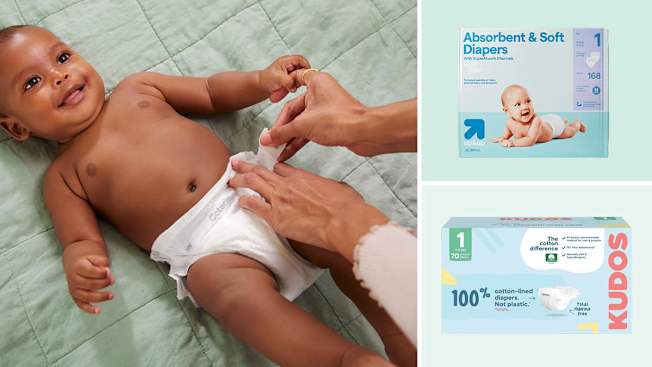
We tested 37 different types of disposable diapers, including Coterie, Huggies, Millie Moon, and Pampers, to find out which ones do the best job of keeping babies dry
Some of our highest-rated diapers will make blowouts a little less messy.
By Angela Lashbrook, Jessica D’Argenio Waller, MS, CNS, LDN, CPST
Ask any new parent: Diapers are a big part of life with a baby. The American Academy of Pediatrics estimates that the average baby goes through as many as 8 to 12 diapers per day, or about 3,000 in the first year alone. So while learning to change a diaper takes practice, trust us: You’ll get plenty. And you’ll gain experience with common diapering challenges, too, from blowouts and leaks to the formidable diaper rash.
Finding the right diaper will help, and as Consumer Reports testers discovered, there’s quite a range in how effective they are. Diapers have become more expensive in the past few years, so the search for ones that are budget-friendly and good at their job—because, yes, diapers have a very important job to do—is a pressing matter for many parents. Below, we share the cost per diaper so you can more accurately compare prices across brands than by looking at package costs in general.
To evaluate the best diapers and overnight diapers, we tested 47 popular diapers in the Consumer Reports lab. We performed two tests, one to measure how quickly diapers absorbed liquids and a second test to determine how well they would keep that moisture away from a baby’s delicate skin. We also referenced safety information from previous Consumer Reports screenings of core diaper sections that tested for heavy metals and phthalates, and we eliminated any diaper brands that fell outside regulatory guidelines.
Curious about what’s actually in the diapers your baby uses? New York state law requires diaper manufacturers to include an ingredients label on their packaging, or risk a fine of up to $1,000 per package. Although the law, which was passed in 2024 and went into effect in December 2025, is specific to New York state, families in other states may see ingredients labeled on their diaper packages, too. A similar bill has been proposed in California, which CR has endorsed.
To learn more about commonly used diaper ingredients, see our investigation on diaper sustainability.
Best Disposable Diapers From Our Lab Tests
Up & Up (Target) Absorbent Soft Diapers
Pocketed waistband: Yes
Wetness indicator: Yes
Sizes available: NB-8
Materials include: Sodium polyacrylate, cellulose pulp, polyolefin, polyester
Price per diaper: 15 cents
Target’s budget-friendly Up&Up Absorbent Soft diapers continue to earn the top score in our tests for their superior absorption speed and quick-dry abilities, and they were our Value Pick in CR’s Top Picks for Diapers in 2026, offering great test results for a low price of $0.15 per diaper. They’re available in a particularly wide range of sizes—from newborn (less than 10 pounds) to 8 (46 pounds or more), and feature two designs per package. Pocketed waistbands at the back of each diaper help control blowouts. These diapers are also free of fragrance, elemental chlorine, and lotion, so they may be a good option for babies with sensitive skin.
Bumbum Luxury Skincare Diapers
Pocketed waistband: No
Wetness indicator: Yes
Sizes available: 1-6
Materials include: Sodium polyacrylate, polypropylene, polyethylene, polyester
Price per diaper: 24 cents
BumBum Luxury Skincare Diapers excelled in our lab tests, absorbing moisture quickly and leaving little wetness behind, and they were our Top Pick for Diapers in 2026. Our testers also liked the aloe-enriched liner—designed to protect sensitive skin—and the diapers’ super soft feel. They have a high waistband to protect against blowouts, and are available in sizes 1 through 6.
Pampers Pure
Pocketed waistband: Yes
Wetness indicator: Yes
Sizes available: NB-7
Materials include: Sodium polyacrylate, polypropylene, polyethylene, cellulose
Price per diaper: 44 cents
Pampers Pure diapers are elemental chlorine-free and have a vitamin-enriched liner to help protect baby’s sensitive skin. In our tests, they excelled in absorbing moisture and drying quickly, which can also help prevent skin irritation. The pocketed waistband protects against leaks and blowouts, and there’s a wetness indicator. Pampers Pure diapers are available in a range of sizes, from newborn to size 7, which goes up to 41-plus lb.
Kudos Cotton Lined Diapers
Pocketed waistband: No
Wetness indicator: Yes
Sizes available: 1-6
Materials include: Cotton, polyethylene, polyester, chlorine-free FSC-certified wood pulp, sodium polyacrylate
Price per diaper: 37 cents
Kudos diapers, founded by an MIT-trained material scientist, engineer, and mom, performed beautifully in both our dryness and absorption tests, so you can be sure that your little one will stay dry and comfortable while wearing them. They’re available in size 1 (7-12 pounds) to 6 (32 pounds and up), and feature a wetness indicator to let you know when it’s time for a change. Kudos diapers are available on the brand website or at Target, and they’re free of lotion, fragrance, and natural latex.
Bambo Nature Premium Baby Diapers
Pocketed waistband: No
Wetness indicator: Yes
Sizes available: 0-6
Materials include: Total chlorine-free cellulose pulp, sodium polyacrylate, polypropylene, polyethylene
Price per diaper: 49 cents
Bambo Nature Premium Baby Diapers did well in our absorption and dryness tests. They absorbed liquids quickly and held the moisture well, preventing it from seeping out. That means (assuming the diaper fits your baby) there’s a decreased risk of picking her up and discovering that her outfit is drenched in urine—or worse, that she’s uncomfortable or developing a diaper rash.
The diapers are vegan, according to the manufacturer. They’re also said to be free of harmful chemicals, perfumes, and all known allergens, though we didn’t verify those claims. A wetness indicator shows when a diaper is ready to be changed. They come in size 0 (for babies 2 to 6 pounds) to 6 (35 pounds and up). Size 0 has a design that protects the umbilical cord area.
Mama Bear Plush Protection Diapers
Pocketed waistband: No
Wetness indicator: Yes
Sizes available: NB-7
Materials include: Cellulose, sodium polyacrylate, polypropylene, polyethylene
Price per diaper: 26 cents
Mama Bear Plush Protection diapers did great on both absorption and dryness tests in the CR lab. They have a wetness indicator and an umbilical cord cutout, and sizes range from newborn (up to 10 pounds) to 7 (41 pounds and up).
According to the manufacturer, the diapers are made with sustainably sourced pulp and are free from elemental chlorine, bleaching, natural latex, phthalates, lotions, and fragrances.
Cuties Complete Care Diapers
Pocketed waistband: Yes
Wetness indicator: Yes
Sizes available: NB-7
Materials include: Elemental chlorine-free fluff, sodium polyacrylate, polypropylene
Price per diaper: 16 cents
Cuties Complete Care diapers are available in newborn size (which the brand lists as “0-10” pounds) through size 7 for babies 41 pounds and up. They’re free of latex, lotion, and fragrance, feature a wetness indicator, and did great on both our absorption and dryness tests.
Coterie The Diaper
Pocketed waistband: No
Wetness indicator: Yes
Sizes available: NB-7
Materials include: Sodium polyacrylate, chlorine-free wood pulp, polypropylene, polyester, polyethylene
Price per diaper: 51 cents
Coterie diapers are simple and white, so no illustrations show through your baby’s onesies. While expensive—they’re $0.51 each—these diapers aced our dryness and absorption tests, meaning they absorbed liquid quickly and held it in, and they’re free from total chlorine, making them gentler on the environment.
They’re available in newborn size (less than 10 pounds) through size 7 (41 pounds and up). They’re free of added fragrance and lotion, latex, rubber, dyes, and optical brighteners. The newborn size features an umbilical notch.
Hello Bello Premium Diapers
Pocketed waistband: No
Wetness indicator: Sizes NB-3 only
Sizes available: NB-8
Materials include: Elemental chlorine-free fluff pulp, polymer, polypropylene, polyethylene, polyester
Price per diaper: 37 cents
Hello Bello diapers excelled in our dryness tests and performed decently well in our absorption tests. They come in bright, colorful designs for newborns (up to 10 pounds) and up to size 8 (46 pounds and up).
According to the manufacturer, there are no lotions, synthetic fragrances or odor inhibitors, gluten, or soy products in these diapers, which have wetness indicators in some sizes and double-layer leg guards for added leak protection. You can buy individual packs or subscribe to Hello Bello diapers via the brand’s website, or buy them at retailers such as Amazon or Walmart.
HealthyBaby Our Diapers
Pocketed waistband: No
Wetness indicator: No
Sizes available: NB-6
Materials include: Sodium polyacrylate, total chlorine-free and FSC-certified wood pulp, polypropylene, polyester, polyethylene
Price per diaper: 53 cents
According to the company, HealthyBaby diapers are “EWG Verified” by the Environmental Working Group. You’ll pay for the privilege, though, because as of this writing, these diapers were the most expensive in our tests. They excelled in our dryness tests and performed decently in our absorption tests. They’re available in sizes newborn (under 10 pounds) to 6 (28 to 40 pounds) and, except for a logo on the back, are plain white, so designs won’t show through your baby’s clothes.
Mama Bear Gentle Touch Diapers
Pocketed waistband: Yes
Wetness indicator: Yes
Sizes available: NB to 7
Materials include: Sodium polyacrylate, cellulose pulp, polyolefin, polyester
Price per diaper: 16 cents
Amazon’s in-house brand Mama Bear’s line of Gentle Touch diapers performed well in both our absorption and dryness tests. They have a wetness indicator and an umbilical cord cutout in smaller sizes, and diaper sizes range from newborn (up to 10 pounds) to 7 (41 pounds and up).
According to the manufacturer, the diapers are made with sustainably sourced pulp and are free from elemental chlorine, bleaching, natural latex, phthalates, lotions, and fragrances.
Luvs Platinum Protection
Pocketed waistband: No
Wetness indicator: Yes
Sizes available: NB to 8
Materials include: Polyacrylate polymer, wood pulp fluff, polypropylene, polyester
Price per diaper: 33 cents
Luvs Platinum Protection diapers come in sizes newborn to 8 and feature a lotion-coated topsheet that contains aloe. The diapers performed well in our dryness and absorption tests, and the manufacturer says that they can offer up to 12 hours of leak protection, though CR did not test this claim.
EveryLife The Diaper
Pocketed waistband: No
Wetness indicator: Yes
Sizes available: NB to 6
Materials include: Sodium polyacrylate, cellulose pulp, polypropylene, polyethylene
Price per diaper: 33 cents
EveryLife diapers performed well in our absorption and dryness tests and have a wetness indicator built in to help you know when your little one is in need of a change. The diapers range in size from newborn (up to 10 lb.) to size 6 (30-plus lb.) and have a cotton backsheet.
Other Disposable Diapers We Tested
We’ve also tested diapers from Freestyle, Millie Moon, Parent’s Choice (Walmart), Member’s Mark (Sam’s Club), Rascals, Kirkland Signature (Costco), and Happy Little Camper, many of which are CR Recommended. See our full list of disposable diaper ratings.
Most of these scored decently in our dryness test, so you can rest assured that your baby will probably stay dry when they lie down in their crib. Some of these diapers were slower to absorb liquid, however, so when your baby pees in one of them, there’s a bigger risk of leaks than if they wear one of our highly rated diapers.
How We Tested the Best Diapers
We performed two tests on size 1 diapers from popular brands.
Absorption: We added 25 milliliters of saline to a tube 1 inch in diameter and let the liquid empty into each diaper, and timed how long it takes for the diapers to absorb the fourth application of saline. This test shows us how quickly the diapers absorb liquid when they’re already pretty wet, so you can be sure that your baby’s tender skin won’t be exposed to urine for long.
Dryness: We looked at whether the diapers retained moisture after absorbing it or let it seep back out when we applied pressure. We did this by placing a folded paper towel over the saline-soaked diaper, placing a weight atop the paper towel, holding it for 30 seconds, and then weighing the paper towel to see how much saline seeped out of the diaper. This was to simulate a baby sitting down or being held with an arm around the bottom.
How We Verified the Safety of the Best Diapers
At Consumer Reports, we take baby and child safety seriously. In the past, we’ve screened core diaper sections for heavy metals and phthalates, and discovered that the diapers fell below the regulatory guidelines, as determined by the Consumer Product Safety Improvement Act, for each contaminant. Because we found nothing of concern in our previous test, we didn’t test for harmful chemicals this time.
Consumer Reports is an independent, nonprofit organization that works side by side with consumers to create a fairer, safer, and healthier world. CR does not endorse products or services, and does not accept advertising. Copyright © 2026, Consumer Reports, Inc.