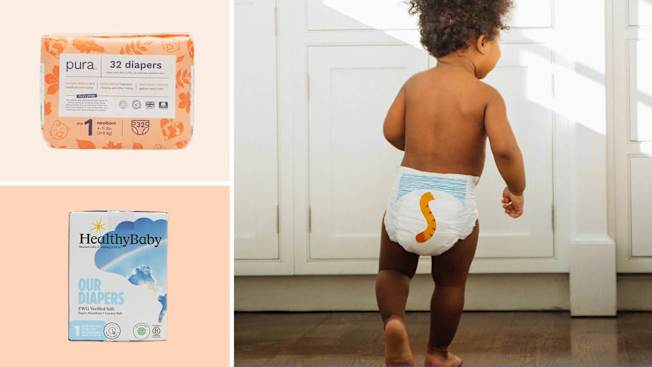
See how TCF and ECF diapers from Bambo Nature, Coterie, HealthyBaby, Kudos, and other brands performed in our tests—plus, learn more about what these acronyms really mean
TCF and ECF are acronyms you might see on diaper packaging: They stand for “total chlorine free” and “elemental chlorine free,” respectively, and refer to processes used for bleaching the pulp in a diaper’s absorbent core. Clockwise from top left: Pura, Cuties, HealthyBaby.
By Jessica D’Argenio Waller, MS, CNS, LDN, CPST
Are TCF diapers worth the extra cost compared with ECF diapers? Both acronyms refer to the type of bleaching used in creating a diaper’s absorbent core: the fluff or pulp inside that helps soak up liquids. While ECF (elemental chlorine free) is now a common manufacturing process for disposable diapers, TCF (total chlorine free) is often presented as a more sustainable and health-conscious alternative. And a recent Consumer Reports analysis found that you’ll definitely pay more for TCF diapers.
In our evaluation of 31 diaper brands, we found that diapers from companies that use a TCF process were about 1.5 times as costly as the least expensive disposable diaper in our ratings. But are they actually better for the environment or for your baby’s delicate skin?
Here’s what to know about the differences in TCF vs. ECF diapers, plus see the best TCF and ECF diapers from CR’s lab tests for absorption and dryness.
What’s the Difference Between TCF and ECF Diapers?
First, a little history: Until the 1960s, the primary method diaper manufacturers used for bleaching diaper pulp involved the use of elemental chlorine. But this process also produced dioxins, a harmful byproduct linked to both health and environmental concerns. In 1998, the Environmental Protection Agency issued regulations to reduce dioxin emissions, which pushed many pulp and paper manufacturers to adopt an alternative bleaching method that doesn’t rely on elemental chlorine, known as ECF. This is the bleaching method used by most diaper manufacturers today.
You might wonder why the pulp core of a diaper needs to be bleached at all. Bleaching helps make the pulp material fluffier and more absorbent. The difference between ECF and TCF diapers is in the type of bleach used in this process. The ECF bleaching process incorporates chlorine dioxide, a chlorine derivative (see more below). The TCF bleaching process is completely chlorine-free, and manufacturers instead use hydrogen peroxide, oxygen, or ozone.
Concern about diaper ingredients has been growing for some time, but there’s a lot of misinformation about the differences and benefits of TCF and ECF diapers. Here, we’ll answer a few frequently asked questions.
Are ECF diapers chlorine-free? No. ECF diapers are free of elemental chlorine, but an alternative chlorine compound, chlorine dioxide, is used in the bleaching process. The use of chlorine dioxide in bleaching wood pulp and paper products has now largely replaced the bleaching process that previously used elemental chlorine. Chlorine dioxide is structurally different from elemental chlorine and produces almost no dioxins as a byproduct. It’s often used in water purification and water treatment processes. TCF diapers, as the name suggests, are totally chlorine-free.
Are TCF diapers better for the environment? Because the TCF bleaching process does not use chlorine in any form, the process is considered to be gentler on the environment, in that it produces no dioxins and other environmental toxins as byproducts, which can end up in waterways. If you’re looking to minimize the environmental impacts of toxic chlorine-related byproducts, TCF diapers may be your best choice. But the TCF bleaching process is still energy-intensive, requiring large amounts of water, electricity, and steam, according to one study.
Are TCF diapers better for babies’ skin? Because the part of the diaper that’s bleached is the absorbent core, which is the innermost layer of the diaper, the actual effect on a baby’s skin may be minimal, given that there’s no direct contact between the bleached pulp and baby’s bottom. Still, diapers produced with TCF bleaching may also use more plant-based materials rather than plastic-based ones, which have been shown to contribute to skin issues. Some TCF diapers may also be free from fragrances, lotions, and dyes, which can be gentler on sensitive skin.
Are TCF diapers worth the extra cost? It depends on what you’re looking for in a diaper. The bleaching method used in your baby’s diaper is just one factor to consider when making your choice. CR’s experts also recommend considering the overall cost per diaper and how it aligns with your budget, especially because it’s estimated that a baby will go through 3,000 diapers in the first 12 months alone—and TCF diapers are more expensive. You’ll also want to consider how absorbent your diaper is (see our top-rated choices below) and, potentially, its environmental impact. In our Diaper Buying Guide, we delve into the environmental costs of using cloth diapers vs. disposable diapers.
Best TCF Diapers From CR’s Lab Tests
Kudos Cotton Lined Diapers
TCF: Yes
Wetness indicator: Yes
Sizes available: 1 to 6
Materials include: Cotton, polyethylene, polyester, chlorine-free FSC-certified wood pulp, sodium polyacrylate
Founded by an MIT-trained material scientist, engineer, and mom, Kudos diapers performed very well in both our dryness and absorption tests, so you can be sure that your little one will stay dry and comfortable while wearing them. They’re available in size 1 (7 to 12 pounds) to 6 (32 pounds and more), and feature a cotton top sheet (the internal lining) and TCF wood pulp.
Bambo Nature Premium Baby Diapers
TCF: Yes
Wetness indicator: Yes
Sizes available: 0 to 6
Materials include: Total chlorine free cellulose pulp, sodium polyacrylate, polypropylene, polyethylene
Bambo Nature Premium Baby Diapers did well in our absorption and dryness tests. The Bambo diapers use TCF cellulose pulp in their absorbent core, and we found they absorbed liquids quickly and retained moisture well, preventing leaks. The diapers are vegan, according to the manufacturer. They’re also said to be free of harmful chemicals, perfumes, and all known allergens, though we didn’t verify those claims.
HealthyBaby Our Diapers
TCF: Yes
Wetness indicator: No
Sizes available: NB to 6
Materials include: Sodium polyacrylate, total chlorine free and FSC-certified wood pulp, polypropylene, polyester, polyethylene
HealthyBaby diapers are “EWG Verified” by the Environmental Working Group, according to the company, and use TCF wood pulp. They excelled in our dryness tests and performed decently in our absorption tests. They’re available in sizes newborn (under 10 pounds) to 6 (28 to 40 pounds) and, except for a logo on the back, are plain white, so designs won’t show through your baby’s clothes.
Coterie The Diaper
TCF: Yes
Wetness indicator: Yes
Sizes available: NB to 7
Materials include: Sodium polyacrylate, chlorine-free wood pulp, polypropylene, polyester, polyethylene
The plain white diapers from Coterie may seem basic, but they aced our dryness and absorption tests, meaning they absorbed liquid quickly and held it in, and they’re free from total chlorine, making them gentler on the environment. They’re available in newborn size (less than 10 pounds) through size 7 (41 pounds and more). They’re free of added fragrance and lotion, latex, rubber, dyes, and optical brighteners, the company says. The newborn size features an umbilical notch.
Happy Little Camper Natural Diapers
TCF: Yes
Wetness indicator: Yes
Sizes available: 1 to 6
Materials include: Not fully listed, but includes wood pulp and dust-free paper, polyethylene film, and super absorbent polymer
The TCF diapers from Happy Little Camper performed well in our tests, especially for dryness. They have a pocketed waistband and a wetness indicator, which is helpful for knowing when it’s time for a change. They’re available in size 1 (under 11 pounds) and up to 6 (35-plus pounds).
Freestyle Hyper Absorbent Diapers
TCF: Yes
Wetness indicator: Yes
Sizes available: 1 to 6
Materials include: Sodium acrylate polymers, silicon dioxide, polyacrylic acid, water, TCF wood pulp, polypropylene, polyethylene terephthalate, polythene
Freestyle diapers use bamboo as part of their absorbent core and are EWG verified, the company says. They’re TCF and come in sizes 1 through 6. They offered excellent performance on our dryness tests but were slower in our absorption tests compared with other diapers. They have a dual-line wetness indicator.
Pura Baby Diapers for Sensitive Skin
TCF: Yes
Wetness indicator: Yes
Sizes available: 1 to 7
Materials include: Plant-based polyethylene, organic cotton, polyethylene, polypropylene, polyester, polyurethane elastic, wood pulp, super absorbent polymer
British brand Pura’s baby diapers for sensitive skin performed very well in our lab tests, especially for dryness. They scored a 4 out of 5 for absorption, which means they were slightly slower to absorb fluid than other top-performers in our tests. Pura diapers are TCF and made without fragrance, lotion, latex, and parabens, and feature an organic cotton outer cover for softness.
Best ECF Diapers From CR’s Lab Tests
Most diaper manufacturers today that do not specify TCF processing use ECF as a bleaching method, because processes involving elemental chlorine have been phased out.
Up & Up (Target) Absorbent Soft Diapers
ECF: Yes
Wetness indicator: Yes
Sizes available: NB to 8
Materials include: Sodium polyacrylate, cellulose pulp, polyolefin, polyester
Target’s budget-friendly Up&Up Absorbent Soft diapers continue to earn the top score in our tests for their superior absorption speed and quick-dry abilities, and they were our Value Pick in CR’s Top Picks for Diapers in 2026, offering great test results for a low price of $0.15 per diaper. They’re available in a particularly wide range of sizes—from newborn (less than 10 pounds) to 8 (46 pounds and more), and feature two designs per package. Pocketed waistbands at the back of each diaper help control blowouts. These diapers are also free of fragrance, elemental chlorine, and lotion, so they may be a good option for babies with sensitive skin.
Bumbum Luxury Skincare Diapers
ECF: Yes
Wetness indicator: Yes
Sizes available: 1 to 6
Materials include: Sodium polyacrylate, polypropylene, polyethylene, polyester
Price per diaper: 24 cents
BumBum Luxury Skincare Diapers excelled in our lab tests, absorbing moisture quickly and leaving little wetness behind, and they were our Top Pick for Diapers in 2026. Our testers also liked the aloe-enriched liner—designed to protect sensitive skin—and the diapers’ super-soft feel. They have a high waistband to protect against blowouts and are available in sizes 1 through 6. They’re elemental chlorine free and free from fragrance, parabens, and latex.
Pampers Pure
ECF: Yes
Wetness indicator: Yes
Sizes available: NB to 7
Materials include: Sodium polyacrylate, polypropylene, polyethylene, cellulose
Pampers Pure diapers are elemental chlorine free and have a vitamin-enriched liner to help protect baby’s sensitive skin. In our tests, they excelled in absorbing moisture and drying quickly, which can also help prevent skin irritation. The pocketed waistband protects against leaks and blowouts, and there’s a wetness indicator. Pampers Pure diapers are available in a range of sizes, from newborn to size 7, for babies 41-plus pounds.
Cuties Complete Care Diapers
ECF: Yes
Wetness indicator: Yes
Sizes available: NB to 7
Materials include: Elemental chlorine free fluff, sodium polyacrylate, polypropylene
Cuties Complete Care diapers are elemental chlorine free and available in newborn size (0 to 10 pounds) through size 7, for babies 41 pounds and more. They’re free of latex, lotion, and fragrance; feature a wetness indicator; and did great on both our absorption and dryness tests.
Hello Bello Premium Diapers
ECF: Yes
Wetness indicator: Sizes NB to 3 only
Sizes available: NB to 8
Materials include: Elemental chlorine free fluff pulp, polymer, polypropylene, polyethylene, polyester
Hello Bello diapers excelled in our dryness tests and performed decently well in our absorption tests. They come in bright, colorful designs for newborns (up to 10 pounds) and up to size 8 (45 pounds and more). According to the manufacturer, there are no lotions, synthetic fragrances, odor inhibitors, gluten, or soy products in these diapers, which have wetness indicators in some sizes and double-layer leg guards for added leak protection.
Why Diaper Materials Shouldn’t Be a Mystery
Until recently, it’s been surprisingly hard to know exactly what your child’s diapers are made of—diaper manufacturers were under no obligation to tell you. But we’ve come a long way in diaper ingredient transparency, thanks in large part to a New York state law that took effect in December 2025, which mandates that all disposable diapers sold in the state include an ingredients label on their packaging.
Similar legislation was introduced in California, supported by Consumer Reports, Children Now, and the Environmental Working Group, and requires diaper manufacturers selling in California to list all ingredients and their purposes both on packaging and online. The dual efforts will give families everywhere more insight into the ingredients in the diapers they use with their children every day—and empower them to make more informed choices.
Consumer Reports is an independent, nonprofit organization that works side by side with consumers to create a fairer, safer, and healthier world. CR does not endorse products or services, and does not accept advertising. Copyright © 2026, Consumer Reports, Inc.